

Domestic Asset Protection Trusts & Self-Settled Spendthrift Trusts Explained – Project Porcupine

USA Selected Domestic Asset Protection Trusts & Self-Settled Spendthrift Trusts Explained

Project Porcupine – Make Yourself and Your Assets Appear Unappetizing As A Porcupine – Using Trusts for Everyday People Trying To Make It Harder To Be Victimized By Scammers, Thieves, and Opportunists. Make 2025 The Year Of Personal Protection In Unsettled Times.

Project Porcupine is an effort to make yourself and your assets unappetizing to people who would take advantage of your good nature or who would try to “shake you down” for a quick payment. You may well have an idea who they are in your life. Business owners who operate outside the USA should consider that Project Porcupine makes you, your family, and your business an unappealing target for kidnappers, extortionists, and other bad actors. Business owners included here are the “high-risk” occupations which are single owner-operated businesses in the benefits of asset protection.1 Project Porcupine is the best alternative.

Project Porcupine uses trusts to protect business and personal assets. In particular, trusts that allow the owner (“settlor”) to have use of the assets, obtain cash as needed, and exercise substantially all the controls as if held in his or her own name. This form of trust is a Domestic Asset Protection Trust (“DAPT”), a “grantor trust” that protects assets from creditors while allowing the person who set up the trust (a settlor or grantor of the trust) to be in control (mostly) and to benefit from the assets including the properties, cash, and other items of value held in the name of the trust.

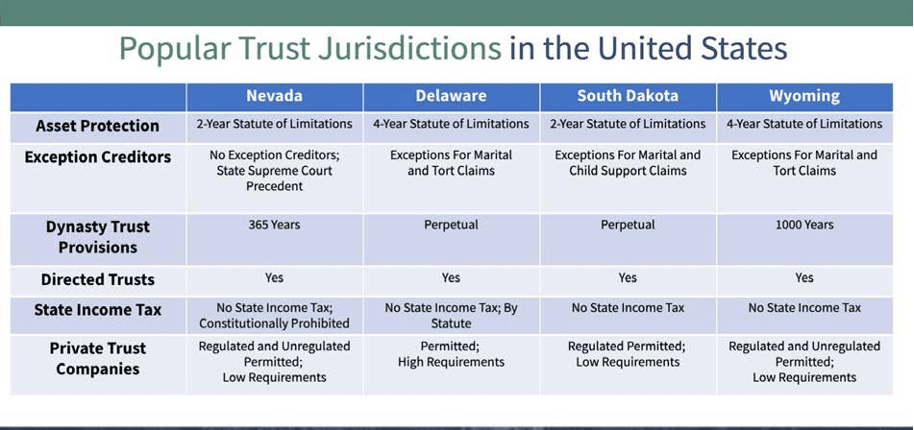
Text Box: Page2Nevada is one of four (4) States with such trusts2 and favorable tax laws. Nevada has the advantage over the others because its laws shorten the time within which a creditor may sue to collect assets within the ownership of the trust.
An Asset Protection Trust helps legally protect assets from creditor

claims without putting the settlor or the beneficiary in violation of laws concerning tax evasion and asset concealment.3 Commonly, State laws allow anyone who is competent to execute a will to create a trust for asset protection. Usually, individuals in high-risk of litigation or risk of loss professions establish DAPTs.4

Based upon experience and several expressed reasons here the State of Nevada presents the best package of DAPT laws for a settlor to consider when forming such a trust.

  • Positive Aspects – The best features of the Nevada Domestic Asset Protection Trusts are as follows (“NDAPT”):
    • The trust structure must be “irrevocable” as defined by law.5 All powers reserved to the settlor of the trust must be clearly laid out in the trust document(s).6
    • The statute requires the trustee or at least one independent co- trustee to be a Nevada resident or a Nevada financial institution with trust powers.7 State statutes require the use of an “independent trustee” before distributions can be made to the grantor.8
    • Trustees are immune from claims of collusion and other nefarious charges merely for being the trustee unless the claims prove by “clear and convincing evidence” that the trustee (or advisor) “knowingly and in bad faith violated Nevada law” and through those specific actions caused damage to the person claiming injury.
    • Nevada allows for directed trusts, which enable the settlor to name him/herself or an independent financial advisor to manage the funds of the trust. However, a NDAPT cannot require the income or principal of a NDAPT to be distributed to the settlor.9
    • Nevada allows for the settlor to grant the authority to him/herself to use real or personal property of the NDAPT, hold lifetime or testamentary limited powers over trustee appointments, removal and replacement, and execute other management powers normally reserved for trustees.
    • Nevada does not tax the income of trusts. Nevada doesn’t have any estate or inheritance taxes. Federal taxes still apply after the exception amount.10
    • A non-resident alien is subject to a 40% estate tax on all US assets upon death, however the trust avoids these taxes. You do not have to live in Nevada to take advantage of a Nevada Asset Protection Trust.
    • There are no exceptions which would allow a creditor (including a divorcing spouse) to reach the trust assets.11
    • The assets are secure from the claims of creditors after the statute of limitations of two years from the date of transfer, or for an existing creditor, six months after the creditor discovers or reasonably should have discovered the transfer, whichever is the latter.12

The Nevada DAPTs have been in existence for more than 20 years, and domestic asset protection trusts are legal in 17 other States in the United States. Yet, there are several risks to asset protect that remain after all this time.

One risk is that the cash, securities and tangible property placed into the Nevada trust will not be safe there from all creditors. This fear doesn’t attach to Nevada assets placed into a Nevada trust. The fear attaches to assets contributed to the NDAPT by the settlor but which are physically located in another State (a non- DAPT State). There is not enough history of legal opinions addressing whether a DAPT will, for a fact, be upheld to protect from creditors the assets transferred into the DAPT. For example, the vacation home in Hawaii when transferred into the name of the NDAPT by the settlor is still a house in Hawaii. A court in Hawaii can determine that the transfer by the settlor violated State laws against transfers if a creditor brings an action. But compare, if the settlor transfers mineral rights in Wyoming to the NDAPT, and a similar effort by a creditor were made to unwind the ownership transfer the outcome is most certainly going to respect the Nevada trust laws since Wyoming is one of the other DAPT respecting States. The same Text Box: Page5analysis occurs for cash, securities and other “moveable” property (i.e., vehicles, livestock, art).

Even while adhering to these requirements, the Asset Protection Trust can still be structured for maximum flexibility by including the following features:

  • Investment Control: The settlor can serve as the investment trustee, allowing the settlor to make all investment decisions, as long as this role is limited so that the settlor cannot make distributions to himself or herself without the approval of another person. This feature is also helpful to satisfy the Nevada trustee requirement, as most clients are leery of handing over investment control and will elect to serve as the investment trustee. If the settlor of a Nevada DAPT declines to act as the “investment trustee,” then another Nevada resident, Nevada trust company or Nevada bank can serve as one of the required trustees to utilize Nevada’s favorable laws. Other States have similar provisions.
  • Veto Power: The settlor can retain a veto power, allowing the settlor to override any distributions that the distribution trustee has authorized. This feature gives the settlor security, knowing that regardless of the authorized distributions, the settlor has the power to reject a distribution. Plus, if the settlor chooses to act as the investment trustee (and the distribution trustee’s powers are limited), the settlor will be the only person making the actual transfers (after receiving authorization from the distribution trustee to do so), as he or she is the only trustee who holds any signatory powers on the trust accounts.
  • Power of Appointment: A settlor can be granted a broad special power of appointment, essentially allowing the settlor to make a distribution to a beneficiary other than the settlor or to rewrite the terms of the trust. This feature is helpful when it comes to adapting to changing circumstances, such as family situations and tax laws.
  • Power to Remove and Replace Trustees: The settlor can retain the power to remove and replace trustees if a change is desired, providing the settlor the comfort of knowing the appointed trustees can be replaced.
  • Power to Use Trust Assets: A settlor who is also a trust beneficiary is permitted by statute to use property held by the NDAPT without having to pay rent to the NDAPT. This feature allows the real or personal property held by the NDAPT to be used by the beneficiaries while it remains protected in the NDAPT rather than requiring it to be distributed out from the NDAPT, thereby exposing it to creditors.

Cost vs Benefit Analysis – There is usually an internal discussion with the settlor about “how much is this going to cost” and with all things important and satisfying the answer is “more than you like but less than you expect.” Aside from attorneys’ fees, bank charges, and the trust registration fees for transferring assets into the trust, some assets might require fees for changing the name on the title deed, registration, or license. Also, some trustees charge a minimum fee, a transaction fee for services, and even a percentage of the trust’s asset value Text Box: Page6(in certain circumstances). The coordination of the tax professionals and the lawyers drafting the trust is not a readily measured quantum at the time of engagement so both accountant and lawyer may well seek something like a combination of a “flat” fee and an “hourly” fee for this work.

Costs for regulatory compliance are also internal to the settlor’s company, family office, or personally. Managing the trust as a trustee imposes costs occasionally not recognized initially through the settlor’s need to change practices to conform with the law. Typically, for example, a settlor acting as trustee may wish to wire money from the bank – however – the rules require the independent trustee to approve the movement of money and thus the wire from the bank (usually the independent trustee is on the bank account). This new “culture” can take a while to get organized and integrated into the standard operating processes.

Costs To Control – Further cost elements may include the following:

Generally, the IRS says that if the grantor creates a trust and retains all benefit of the trust property for his or herself,

  • The Independent Trustee – The independent trustee is a cost center which will be new to the settlor. There is a fee for the time of the independent trustee to review and approve all payments from trust accounts and there is paperwork (always) required to establish the payment is in the interest of the trust. This type of bureaucracy is usually new to the settlor and takes time to become routine, and costs fees for each distribution as a result. The pace and lack of autonomy is usually the most frustrating part of the change to the DAPT. For example if using a Nevada DAPT then finding a Nevada resident to act as the independent trustee is one alternative to hiring a professional trustee for cost and convenience. However, the Nevada resident may well not aid the settlor in maintaining the “formalities” necessary for successful compliance with the law. Less common are lawyers who agree to serve as the independent trustee because they can get sued or receive Bar Association complaints for which there is no indemnity from the trust. Negotiating a package of services from the professional trustee companies is the better approach for the settlor.
  • Tax Professionals – The accounting and tax preparation fees should be expected for items little (i.e., obtaining the tax payer number for the trust) to large (i.e., booking the basis and present values of assets that are contributed to the trust). The setting up of books, chart of accounts, and building the journal entries is time consuming even with the benefit of software (maybe AI aided can reduce costs). The maintenance of the asset registers and the justifications of disbursements from the trust assets requires routine accounting attention to detail including tying the distributions back to the intention statements in the trust documentation. The amount of the new expense will be in direct relationship to how well organized the settlor’s books are at the time of action, and how easily the settlor can build a standard operating procedure to tie the electronic accounting system transactions to the trust’s stated intent.
    • Generally, the IRS says that if the grantor creates a trust and retains all benefit of the trust property for his or herself, then the trust is a disregarded entity. Even though the trust may legally own the trust property, the IRS treats that grantor as the real owner of the property.13 The settlor usually wants a specific tax treatment for the trust and the assets moved into the trust
    • There are also tax consequences relating to the “reversionary interests” and to the exact type of “administrative powers” retained by the settlor as set forth in the trust document(s).
    • There are tax consequences found in shifting the financial nexus of the business or the assets to a sales tax jurisdiction (such as Nevada) and these costs also need to be evaluated and compliance with the taxing regime planned.14

The tax professionals, accountants, and the lawyers need to all be engaged at some level to help the settlor with selection of jurisdiction(s)15 and compliance mechanics.

  • Legal Professionals & Transaction Advisors – The attorneys fees and transaction advisor fees are usually “front end loaded” if the trust is set up and the corpus is funded from the first day. There are some situations where funding the trust is delayed or even deferred for future events. However, the opportunity for failure (i.e., forgetting to transfer assets intended for the trust or for which trust cash or value is expended to support without the asset being inside the trust) usually urges the settlor and the lawyers to move expeditiously through formation to operation.
    • The fee for drawing up the trust document(s) is usually related to the magnitude of the malpractice exposure than it is measured by the hours spent as a draftsman. Many basic trust documents are already in “form” conditions and the time to fill in blanks is deceptively short. However, discussions by the settlor and the lawyer about selecting the jurisdiction and form of trust or methods of transfer can take a substantial amount of discussion. For example, privacy concerns about resisting public disclosure of the trustees or beneficiaries, or tax concerns for the operations and earnings of the assets, or the weighing of the creditor protections (statute of limitations) of the assets under a particular set of laws – these are a handful of the legal issues that should be discussed within the “documentation phase” of the engagement.16
    • Some settlors may be concerned about making transfers of assets into the trust from a State that doesn’t respect these types of asset protection trusts. A work-around for the settlors of the DAPT may be establishing a “Hybrid-DAPT” address the fears of asset transfers (or being a resident of) a non-DAPT jurisdictions The form is a basic DAPT with a third party settlor (either nominee or attorney) or (in the Text Box: Page9alternative) with the settlor not a named as an express beneficiary at the time of formation. 17
    • The settlor should reasonably expect to pay a “flat fee” for the trust documentation, and a separate (usually hourly) fee for the transfer documentation that accompanies each asset transferred into the trust and a series of other regulatory compliance issues which usually fall into the lawyer’s scope of work. An experienced attorney will be able to provide a “maximum price guarantee” for the entire program if asked. The written representation agreement must have a defined “scope of the representation” which should be expected to clearly separate the tasks for which the fees are either “flat” or “hourly.”
    • Occasionally, the flat fees for the trust documentation may appear large relative to the eight or more pages of the average DAPT. In this instance size doesn’t matter – quality and risk management matter. The rationale for the fee is that the documentation reflects the benefit (through brevity) of the experience of the lawyer engaged, and the measure of “risk” that lawyer assumes by preparing the trust which is “irrevocable” (and that word means what it says). The lawyers who document a trust can be expected to charge more and to take more unseen steps to assure the settlor and themselves that the (1) trust reflects all the intent and plans for the predictable uncertainties of life; and (2) that the assets moved into the trust are transferred properly and with the full understanding (“informed consent”) of the settlor. Failures in the either of these steps could leave a chaotic gap in trust administration or leave the trust assets vulnerable to a creditor claim. Lawyers will insist that the fee for service reflects the level of risk in a future lawsuit for some defect in the transaction.
    • The hourly fees for the asset transfer and other work outside of the trust document itself will necessarily include the State specific transfer documentation for the assets, and extensive discussions with the accounting and tax professionals to reach the valuations required to establish the tax basis among other details. In some instances, a federal tax opinion may be required for a transaction which is either contemplated or conceived. In other instances lawyers will review and advise the settlor on federal compliance issues such as the Corporate Transparency Act (“CTA”) which will require disclosure of the beneficial ownership to the Financial Crimes Enforcement Network (“FinCEN”).” The settlor should be prepared to negotiate the hourly fee structure with the lawyer understanding these very important issues are less apparent to the non- professional.

The degree of consultation and coordination of the professionals should be more apparent in this described context. Consider seeking a Guaranteed Maximum Price for the entire scope of work as a way to manage costs and expectations.

An experienced lawyer should be able to offer such a concession.

Why Now ? – There is no time like the present for planning and budgeting the asset protection plans for the coming year. The exposure to risk has not necessarily increased on a global level but the amount of wealth you have exposed to that risk may have increased over the last year(s). The international reports on crime and poverty make clear that crimes of violence (including kidnapping) are on the rise in both developed and developing countries. The World Bank reports that the rate of reduction of global poverty has shrunk to almost one half of one percent (.06%) and the rate of consolidation of wealth in the richest 1% has risen to account for half of the total income in the world. The richest .01% has increased its possession of global wealth from 8% three decades ago to 12% today according to the International Monetary Fund. The global population has grown to 8.2 billion people and will reach 10.4 billion by 2080 despite industrialized nations experiencing a decline in birth rates (below replacement levels) in this same time period according to the United Nations.

The totality of the global environment recommends to the prudent business person to begin migrating assets into more secure protective structures which offer continued use of the assets with no substantive tax consequences. Project Porcupine is worth considering now.

Reference List

  1. Nevada Self-Settled Spendthrift Trusts and NDAPT sources:
  2. Internal Revenue Code, Grantor Trust Rules:
  3. Nevada Sales & Use Tax Rates:
  4. Wyoming Sales Tax Rate Information:
  5. South Dakota Sales & Use Tax Info:
  6. Delaware Gross Receipts Tax:
  7. Case law reference:
    • Klabacka v. Nelson, 133 Nev. 164, 394 P.3d 940 (2017)
  8. Journal citation:
    • McCandless, C., Nevada Lawyer, December 2018

Democratic Change In Southern Africa

Young African Voters Sour on the Parties That Ushered in Liberation – What Does It Mean For Risk Management of Direct Foreign Investments?

The Republic of Botswana, on November 1, 2024, held a national election which declared the opposition Umbrella for Democratic Change (“UDC”) the winner. The UDC’s triumph ushers in a new political majority and a new government for Botswana, a monumental political shift after 58 years of rule under the outgoing Botswana Democratic Party (BDP). However, this should not be construed as a “trend” for Southern African democracies despite the May 20, 2024 Republic of South Africa elections which ushered in for the first time since 1994 a “Government of National Unity” composed of the opposition coalition and the formerly ruling party African National Congress (“ANC”). There are significant differences between these two elections which removed or reduced the ruling parties, and the October 24, 2024 Mozambique election (in which victory is claimed by the opposition though power is retained through force by the ruling FRELIMO party) and the up-coming elections in Namibia on November 27, 2024 (which will predictably favor the ruling SWAPO party with a return to the majority and the presidency). The reality remains today that in Southern Africa the populations which benefit from the status quo are strong enough or are reluctant enough to preserve the ruling parties in power.2 The international investment community will observe that the Namibian elections do not oust the ruling party, but if it does, the risk management of foreign direct investments will become more problematic rather than less so when the ruling party is ousted from power.

What the global investment community should anticipate is a rise in corruption in Botswana (and in any Southern African nation where the ruling party is ousted). The most current example, Kenya, saw extraordinary increases in corruption when the party of Daniel Arap Moi lost the 2002 presidential elections to the party of Mwai Kibaki. Moi, who served from 1978 through 2002, was a member of the Kalenjin people. He displaced the Text Box: Page2then ruling Kikuyu elite (the reputed Kambu Mafia of founding President Jomo Kenyatta)3 with the Kalenjin for 30 years. When Kibaki and his Kikuyu returned to power the pillaging by newly installed bureaucrats was so epic that the press referred to it as “an orgy of corruption.”4 The saga of this orgy is told in the “tell all” book of Kbaki’s hand-picked anti-corruption enforcer Michela Wrong in the 2010 book titled “It’s Our Turn to Eat: The Story of a Kenyan Whistle-Blower.”5 The former newspaper reporter signed on with Kibaki’s inaugural administration and two years later fled for his life to London requesting political asylum and hiding in a series of government safe-houses. The “orgy of corruption” increased the inequality of Kenyan society in a statistically significant manner as measured in the GINI coefficient.6 This outcome is reasonably predictable in heterogenous multiparty democratic nations in Southern Africa.

What the global investment community should anticipate is a rise in corruption in Botswana (and in any Southern African nation where the ruling party is ousted). The most current example, Kenya, saw extraordinary increases in corruption when the party of Daniel Arap Moi and the Kalenjin people lost the 2002 presidential elections to the party of Mwai Kibaki. When Kibaki and his Kikuyu tribes returned to power the pillaging by newly installed bureaucrats was so epic that the press referred to it as “an orgy of corruption.” Referred to as “It’s Our Turn To Eat” and described in great detail by whistle blower Michela Wrong in the book of that title. The orgy of corruption is what follows the ouster of the ruling parties in Southern African multiparty democracies.

Analysis – The November 1, 2024 Botswana election of and peaceful transfer of power to the UDC is the second such defrocking post independence of a revolutionary party in a dominant ruling party nation. This is not the start of a wave of change in the Southern African region, where the once dominant political parties of independence and liberation, are facing building efforts which are gradually gaining leadership and skills to effect replacement through campaigning on the promise of service delivery and a better future for all.7

The historical precedent of replacing the ruling party, as seen in Kenya, is the increased economic inequality and suffering of the ordinary citizens at the hands of the new power elite. Civil unrest should be the modern outcome of this scenario. The significant increase in voting aged youth, and the unemployment of same, makes the likely scenario that civil society will fracture when the ruling party is ousted. The fractures could appear like the Mozambique of October 2024 (where the ruling party forcibly remains in power). It is probable that Botswana will never experience such a fracture. Botswana is such a small homogenous population of essentially the same tribal communities that Botswana may well experience no significant unrest should the newly empowered party UDC enjoy the spoils of power. Namibia on November 27, 2024 will be the more relevant case study with significant differences in tribal/party alignments more akin to Kenya than to Botswana. The foreign direct investment community will discover that risk management becomes more problematic rather than less so if SWAPO, the ruling party, is ousted from power at the ballot box.

  • Namibia – Namibia holds national elections on November 27, 2024 to elect the 96 member national assembly and the President (commencing March 21, 2025 and limited to 2 terms). South West Africa People’s Organisation (“SWAPO”) has ruled Namibia since independence from South Africa in 1990 though only taking 56.3% of the vote in the 2019 elections. The official opposition is the Popular Democratic Movement (“PDM”) (with only 16 seats compared to SWAPO’s 63).8 McHenry Venaani, president of the Popular Democratic Movement opposition political alliance, technically registered as one party – Mr. Venanni came in 3rd in the 2019 elections.9 While the SWAPO candidate has dominated Namibian presidential elections since independence in 1990, the margins have been decreasing, and SWAPO’s popularity has been suffering in recent years due to scandals10 and younger voters, particularly those born after independence, supporting other parties. Recently SWAPO has lost in local elections such as in the capital city of Windhoek.11 The Independent Patriots for Change (IPC) is a political party in Namibia. It was founded by Panduleni Itula in August 2020.12 As an independent presidential candidate in the November 2019 election, Itula won the best result of a losing candidates ever in elections in Namibia (29% of the vote).

    Opinion and thought leaders offer that – “The role the SWAPO Party played in the independence struggle was phenomenal, but the upcoming generation born after independence, has different expectations and perspectives on life and its own future than the older generation. The younger generation is not any longer particularly perceptive to slogans related to the hard won independence struggle. Their vision is on the road ahead and not motivated by the past. In addition, a generation gap on the relevance of particular issues is obvious and cannot any longer be ignored. If not adequately dealt with it will be to the disadvantage to the SWAPO Party. As from 2008, the new generation born after independence will be entitled to vote. Many of its members are urbanized with expectations different to those in rural areas.”13 Yet, the critical level of decay for the support of SWAPO does not appear to have been reached as of the latest reporting on October 16, 2024.14 The generally accepted predictions are that SWAPO will retain control of all national political power structures as a result of the elections.15
  • Mozambique – General elections were held in Mozambique on 9 October 2024 to elect the president, the 250 members of the Assembly of the Republic and members of the ten provincial assemblies. The ruling FRELIMO party was declared the winner of the election, with its leader, Daniel Chapo, proclaimed as president-elect. This was disputed by Venâncio Mondlane, with his party PODEMOS claiming Mondlane had received 53% of the vote using data from their poll observers. The result was also questioned by the Episcopal Conference of Mozambique and the European Union, while deadly protests broke out over the election results, with at least 10 protesters being killed by police forces.

    On October 24, the Mozambican election commission announced that Daniel Chapo and the ruling party Frente de Libertação de Moçambique (Front for the Liberation of Mozambique, FRELIMO) had won the October 9 general elections. The elections and pre-elections period were marred by political killings, widespread irregularities, and restrictions on the rights to freedom of expression and assembly. “Mozambique’s authorities must immediately halt their escalating assault on the rights to freedom of expression and peaceful assembly” declared Amnesty International on October 31, 2024.

    Police in Mozambique fired tear gas and rubber bullets Saturday as they dispersed protests in several cities over a disputed presidential election, according to Agence France-Presse reporters on November 2, 2024. The leading opposition candidate, Venancio Mondlane, has called for nationwide protests until November 7, with a final Text Box: Page5rally planned in Maputo the AFP reported. Mozambique has imposed internet restrictions since post-electoral violence broke out, including blocking access to Facebook, Instagram and WhatsApp the AFP reported.

    Fortunately, the Mozambique armed forces are not involved in the violence. The active duty military only numbers 11,200 with a shooting war in the northern provinces with Islamic inspired forces absorbing most of the effective units (along side forces from Rwanda and the Southern African Development Community member states). This ongoing Islamist insurgency in Cabo Delgado Province is mainly fought between the established armed forces and the rebel militant Islamists attempting to establish an Islamic state in the region. Most rebels belong to the Mwani and Makwa ethnic groups that are native to Cabo Delgado. The international forces withdrew in July 2024 as a result of widely reported political tensions between the states and the ruling party. Unemployment and especially youth unemployment are considered the main causes for locals to join the Islamist rebels (collectively referred to as “Ansar al-Sunna”).

    Increasing inequalities in wealth (GINI coefficient) have led many young people to be easily attracted by such a radical movement which promises that its form of Islam will act as “antidote” to the existing “corrupt and elitist rule. In March 2024 the International Committee of the Red Cross (“ICRC”) reported “Some 46,000 people fled from the Chiure district of Cabo Delgado into Nampula province in search of safety.” In Cabo Delgado, they are struggling with the effects of last year’s withering drought that slashed harvests. As a result, over 879,000 people are facing “crisis” or “emergency” levels of food insecurity across the region.

    But despite the all of the crisis and chaos, the election victory of Daniel Chapo, the Frelimo presidential candidate, will bring little change to the near-term trajectory of the crisis. No increase in the foreign aid for Mozambique (which has plateaued) will occur under a continuation of the regime. The country’s overall $413 million humanitarian response plan is only 37% funded reported the New Humanitarian on October 8, 2024. Rwanda’s forces, in particular, have earned a reputation for efficiency and skills that Mozambique’s small and ill-trained military lacks. “Rwandans have become a parallel authority in Cabo Delgado,” said Peter Bofin, a senior researcher at ACLED. “Civilians who have problems go straight to Rwandans rather than Mozambican police or army.” Chapo visited Rwanda in June 2024 and clearly regards Rwanda’s continued military intervention – funded by the EU – as key to restarting TotalEnergies’ paused project, and to a separate LNG investment decision by ExxonMobil that is expected by the end of 2025.

    The improved security around Mocímboa da Praia and Palma created the conditions for people to return to their homes – heavily encouraged by the government. The IOM estimates that over 600,000 displaced people have gone back. There has been an uptick in al-Shabab violence in the run up to the election this October, with fresh flows of IDPs to the safer areas of Cabo Delgado. The political violence is entrenching itself rather than dissipating after the elections. Unless there is a political solution effected before the November 7, 2024 showdown in the streets of Maputo and other major population centers, the hold of FRELIMO on effective national power will fracture.
  • Botswana – The Botswana Democratic Party, which had governed the southern African nation since it gained independence from Britain in 1966, went from winning two-thirds of the seats in Parliament five years ago to coming in last among the four parties that competed in Wednesday’s elections. Botswana is a parliamentary republic governed by the Constitution of Botswana. It is the longest uninterrupted democracy in Africa. A lot of the reasons for this fact is the homogenous population,16 and the very small size of the professional military.17

    The nation’s elections are recognized as free and fair, but the ruling party has institutional advantages that other parties do not. Factionalism is common within Botswana’s political parties, and several groups have formed new parties by splitting from established ones. Since 2019, the Umbrella for Democratic Change has operated as a coalition of opposition parties ked by Duma Boko. Botswana was ranked as a “flawed democracy” and 33rd out of 167 states in the 2023 Democracy Index, which was the second-highest rating in Africa.

    Botswana is one of the most sparsely populated countries in the world. It is essentially the nation-state of the Tswana people, who constitute nearly 80 per cent of the population. The British protectorate named Bechuanaland became an independent Commonwealth of Nations Republic of Botswana in 1966. Subsequently, Botswana has enjoyed a consistent record of uninterrupted democratic elections. Botswana’s governmental structure is based on a merged Westminster system and the Tswana people’s tribal governments with a centralised government in which national law supersedes local law.

    The Botswana Democratic Party had been the only ruling party from independence until 2024. As of 2024, Botswana is the third-least corrupt country in Africa, according to the Corruption Perceptions Index published by Transparency International.

    The economy is dominated by mining and to a lesser extent for revenue is international tourism. As noted in recent analysis for the International Monetary Fund (IMF). The government now receives almost 85% of the profits from diamond mining. Botswana generates 80-90% of its export revenues from diamonds in a typical year. The country’s dependence on a single industry – even one as lucrative as diamonds – leaves it severely exposed to fluctuations in the global market. Botswana has a per capita GDP (purchasing power parity) of about $20,158 as of 2024. Its relatively high gross national income per capita (by some estimates the fourth-largest in Africa) gives the country a relatively high standard of living and the second- highest Human Development Index of continental Sub-Saharan Africa (after South Africa). Despite this, Botswana continues to grapple with high unemployment rates. “Botswana is facing a severe slowdown,” an IMF delegation warned earlier this month following consultations with Botswana’s government. It predicts that GDP growth will shrink to just 1% in 2024, down from 2.7% last year and 5.5% in 2022. The blow to the economy “reflects weaker global demand for diamonds and a sharp increase in inventories,” the IMF said. Botswana Defence Force (BDF) was formed in 1977, is commanded by the President, and the BDF’s missions have focused on preventing poaching, preparing for disasters, and supporting UN peacekeeping missions in Africa.

Reference List

  1. John Eligon and Yvonne Mooka, Young African Voters Sour on the Parties That Ushered in Liberation, The New York Times, November 2, 2024
    https://www.nytimes.com/2024/11/02/world/africa/botswana-election-africa-youth.html
  2. Fitch Solutions, Namibia’s Election Scenarios: SWAPO to Secure Majority, Presidential Race More Closely Fought, September 26, 2024
    https://www.fitchsolutions.com/bmi/political-risk/namibias-election-scenarios-swapo-secure-majority-presidential-race-more-closely-fought-26-09-2024
  3. Moi skillfully exploited Kenya’s ethnic tensions – Summary of Kenya’s political dynamics during Moi’s rule
  4. Al Jazeera, Mwai Kibaki: The Man Who Epitomised Kenya’s Tragedy, April 25, 2022
    https://www.aljazeera.com/opinions/2022/4/25/mwai-kibaki-the-man-who-epitomised-kenyas-tragedy
  5. Michela Wrong, It’s Our Turn to Eat: The Story of a Kenyan Whistle-Blower, Harper, 2010
    https://www.amazon.co.za/Its-Our-Turn-Eat-Whistle-Blower/dp/0061346594
  6. Kenya National Bureau of Statistics, Inequality Trends and Diagnostics in Kenya Report, 2020
    https://www.knbs.or.ke/wp-content/uploads/2021/07/Inequality-Trends-and-Diagnostics-in-Kenya-Report.pdf
  7. Gerhard Toetemeyer, The Management of a Dominant Political Party System – Namibia, International Seminar, December 10–12, 2007, Maputo, Mozambique
  8. The Africa Report, Namibian Elections: Meet the Parties, October 16, 2024
    https://www.theafricareport.com/364838/namibian-elections-meet-the-parties/
  9. Fitch Solutions, Election Forecast Summary (October 2024)

Counter-Money Laundering & Registering Your Business in South Africa

In order to do business in South Africa your entity or you individually need to have a local presence with supporting documentation which passes a lot more than the old “Know Your Customer” requirements we are familiar with since the Twin Towers fell in New York City (“9/11” in American jargon). The new multi- jurisdictional requirements are a product of an international task force sponsored by the World’s biggest financial participant nations. Nations who choose not to participate in the disclosure regime are punished by “peer to peer” rebukes rather than force of international law. This new regime demands the disclosure of the routine post 9/11 data on you and your company (the potential tax payor) and descends into the depths previously unexplored by all but a few nations — levels of candor which descend into the workings of the company and you right down to the identity of the “beneficial owner” meaning the person who is really in charge or really getting the money. This new disclosure is then shared with the participant nations. No warrants. No suspicions. This is the new world of information sharing in which your private information is freely exchanged across international boundaries with nations in which you may or may not be doing business. South Africa is a charter member of this new world – and you need to be aware of its rules – if you wish to do business in South Africa and thus all of Sub-Saharan Africa it serves.

The new disclosure regime has also added a very new affirmative “duty to inquire” – imposed on the new “reporter” class — banker, lawyer, auditor, and real estate broker – an unimaginable burden on the well- heeled cadre of “secret keepers” who have long sheltered the “principals” of any deal behind veils, if not walls, if not bunkers of institutionally condoned silence. These reporters face criminal charges for failure to snitch on clients under the new regime’s disclosure standards even if the client is never charged with a crime.

Therefore, under the new regime there is (1) more disclosure by more professionals than in the past, and (2) the failure to either disclose, require disclosure, or snitch on the client’s transactions, will result in the reporter facing criminal justice. In sum, your banker, lawyer, or auditor (among others) must affirmatively look for unusual transactions by you or your company and then must report you or your company to the authorities if he thinks a transaction you have ordered is “unusual” without regard to any request by you for his involvement. He must “snoop” on you or face jail time. He must “snitch” on you or face jail time. This is the new regime.

However, nothing should be surprising about these facts to the international businessman. This new regime is already in place in many countries but in “name only,” thus do not conflate the national laws with express statutory requirements, stiff criminal sanctions, and the commensurate tradition of abuse of legal process, with an equally vigorous and honest implementation regime at the national level. It will take decades to alter the cultures which preceded this new regime. It will take huge alterations of budget priorities to make enforcement a credible inducement for voluntary local compliance. But, the more international the client or the reporter firm – then the more likely that compliance will be automatic and readily volunteered. It is best to assume that you and your company should as well.

Contextualize the new regime requirements to the simple matter of the market entry issue within South Africa alone. A business wishing to enter the South African market must (1) register [broad description]; (2) engage a series of professionals [lawyer, auditor, banker]; (3) open a bank account, and (4) obtain a phone [assuming mobile phone for speed and reliability]. In order to accomplish any of these four steps the company and its officers need to satisfied the identification requirements of the Financial

Intelligence Centre Act (38 of 2001) (the FIC Act) came into effect on the 1st of July 20031. South Africa participates in the new multi-jurisdictional requirements through the Financial Intelligence Centre Act which is intended to assist with the identification of the proceeds of unlawful activities; combat money laundering; and combat the financing of terrorist and related activities. The Act does this currently by creating a legal framework for identification and verification of the “client” identity. Mobile phones are covered by a “little brother” to FICA know as RICA. Regulation of Interception of Communications and Provision of Communication-Related Information Act 70 of 2002 (RICA)(effective July 1, 2011) is a law that makes it compulsory for everyone in South Africa to register their cellphone number providing the seller with a complete proof of identity document set (with no companion protections against identity theft2) and allows the government to eavesdrop on those conversations under proscribed circumstances. http://www.groundup.org.za/article/rica-south-africa-how-big-big-brother_1882/

  • Register Your Business – Financial Intelligence Centre Act (38 of 2001) (the FIC Act)

  • Hire A Professional – Financial Intelligence Centre Act (38 of 2001) (the FIC Act)

  • Open a Bank Account – Financial Intelligence Centre Act (38 of 2001) (the FIC Act)

  • Lease an Office or Purchase Realty — Financial Intelligence Centre Act (38 of 2001) (the FIC Act)

  • Obtain A Mobile Phone — The mobile phone requires compliance with the Regulation of Interception of Communications and Provision of Communication-Related Information Act (RICA)

The origin story for the new regime is the ever- increasing standardization of information collection and sharing predates the 21st Century. Drug cartels provoked national laws aimed at interdiction and arms control in the last century. The rise of the Euro, the consolidation of European banking at all levels, and the fall of the so called “Communist Block” and then the collapse of the “Pan-Arabist” nations all set the standardization stage by making fewer participants at the top of the monetary system, and fewer state actors operating to frustrate that system’s efforts at hegemony. The standardization effort starts with the Financial Action Task Force on Money Laundering (FATF) which was established by the Paris 1989 G-7 Summit. The Financial Action Task Force (FATF) is not an enforcement agency or organization. Instead it is an international “inter-governmental body” established in 1989 by the Cabinet Ministers of its member states. In addition, the FATF has not been formed as a formal international organization under treaty or United Nations authority. Rather, the FATF is a “club” self-styled as a task force composed of the designated unelected representatives from member governments whose governments agree to fund the FATF for specific goals and projects (a “mandate” in FATF-speak). If you are a country invited to participate and you are willing to pay a designated share as determined by the existing members – then you can have a seat at the table. This is one of the least transparent and undemocratic organizations (“clubs”) ever established by the international community, and its bias (as seen in its standardization demands on other nations) is well tilted to advantage the wealthy northern sphere nations.

The stated objectives of the FATF are to set international standards and promote effective implementation of legal, regulatory and operational measures for combating money laundering, terrorist financing and other related threats to the integrity of the international financial system. The FATF is therefore classed and self-described as a “policy-making body.” In turn those policies are intended to generate the “necessary political will” (to quote the FATF) to bring about national legislative and regulatory reforms in these areas. The more candid language would admit that “peer to peer” coercion is used to force all nations into the system whether members of the “club” or not.

The FATF has coercive hammers. It developed a series of “Recommendations” that are promulgated as the international standard for combating of money laundering and the financing of terrorism and proliferation of weapons of mass destruction. In February 2012, the FATF completed a thorough review of its standards and published the revised FATF Recommendations intended to strengthen global safeguards expanded to deal with the financing of proliferation of weapons of mass destruction, and to be clearer on transparency and tougher on corruption (“2012 Recommendations”). The 9 Special Recommendations on terrorist financing have been fully integrated with the measures against money laundering into the 2012 Recommendations adopted by the FATF’s decision making body, the FATF Plenary (an unelected self-selecting body), which meets three times per year. http://www.fatf-gafi.org . Nations are then subjected to “peer evaluations” by the “club” members, and subsequently “encouraged” to repair non-compliance by aligning national laws, economic and budget priorities, and implementation and police strategies with closing those “weaknesses.”

Shame and peer pressure push uniform compliance. The FATF identifies jurisdictions with weak measures to combat money laundering and terrorist financing (AML/CFT) in two FATF public documents that are issued three times a year. The FATF’s process to publicly list countries with weak AML/CFT regimes has proved effective. South Africa’s 2009 Mutual Evaluation identified several areas of “weakness” in the security of the financial reporting system. http://www.fatf- gafi.org/media/fatf/documents/reports/mer/MER%20South%20Africa%20ES.pdf The 2012 Recommendations (anti-terrorist provisions) set more comprehensive standards for “transparency in international financial transactions – in effect – looking behind the entity façade to the “real” people in charge.

Outside of the rule of law or nations the FATF operates autonomously. The Organization for Economic Co-operation and Development (OECD) has, together with the Group of Twenty (G20), developed a standardized, secure and (self-described) “cost effective” model for bilateral automatic exchange of information as a companion to the FATF standardization collection efforts. On 23 February 2014, the G20 Finance Ministers endorsed the Common Reporting Standards for automatic exchange of tax information (CRS Standard). The FATF and the OECD are separate entities with the OECD being the only “international organization” of the two – yet – the FATF Secretariat (currently 17 full time unknown bureaucrats) is housed administratively at the OECD. Although the member countries overlap to a large degree, there are several countries which are members of the FATF and not the OECD, and vice versa. The conclusions to be drawn from the disjunction are evident.

South Africa is a “charter member” as one of the early adopters of the FATF Recommendations and the CRS Standard and has committed to commence exchange of information automatically on a wider approach from 2017 onwards. Under the current executive administration South Africa has fallen behind schedule in its obligations to adopt the current FATF Recommendations. This failure places the South African international movement of currency into regulatory jeopardy. Many stakeholders are exorcised by the delay.

The South African 2013 FICA Amendment process, the results of which are enshrined in the 2015 Amendments Bill, remain ineffective until the Bill is signed by the national executive. http://mg.co.za/article/2017-01-31-crib-notes-everything-you-need-to-know-about-the-fic-amendment-bill . That process has witnessed an orchestrated effort to prevent its adoption according to the press in South Africa. Issues of “state capture” and politically “exposed” people resisting financial transparency are often cited in press reports as reasons for the delay. The rationale for the delays include stakeholder guilds expressed concern about warrantless searches by the financial regulators of the member countries. Whatever the reasons the deadline imposed by FATF for alignment of the law to the 2012 Recommendations expires in February 2017.

The Amendments and the debate surrounding them don’t attempt to address another systemic weakness created by the very particular burdens of the FATF Recommendations which is the failure to address the economic challenge of compliance by the citizens of ESAAMLG countries (Eastern and Southern Africa Anti-Money Laundering Group). Such a debate surrounding the Amendments would actually be a legitimate reason for a regional leader, such as South Africa, to resist the new regime. But. Alas. The delay has nothing to do with improving the access of ordinary South Africans to traditional institutional banks leaving “unbanked” 23% of South Africans in 2015.3 Unlike many citizens of the developed nation members, the citizens of many African nations do not have access to identity documents, banks, auditors, and other “Accountable Institutions” and professionals4. The documentation burdens are real. More important, the increase in financial participation since the new regime came into effect has occurred in the “informal mechanisms” which are the same ones which fee the criminals the new regime is supposed to be discovering. These barriers imposed through international “Recommendations” fail the test of integrating the unbanked part of the population into the formal financial sector.

FATF Secretariat (through its written reports to member states) is convinced that financial inclusion and AML/CFT pursue mutually supportive and complementary objectives: the application of measures which enable more citizens to use formal financial services will increase the reach and the effectiveness of AML/CFT regimes. Her Majesty Queen Máxima of the Netherlands, in her capacity as United Nations’ Secretary General Special Advocate for Inclusive Finance for Development, visited the June 2013 FATF Plenary and commended FATF’s commitment to support financial inclusion efforts. http://www.fatf- gafi.org/publications/fatfgeneral/documents/esaamlgsept2013.html . Unfortunately, the Queen could not identify a single exception to the “Recommendations” designed to assist the “unbanked” population. Further, nothing in the South African Amendments Bill lifts a single burden from the “unbanked” who continue to be blocked from entering the financial mainstream. These same people are often the most vulnerable in our societies – and the least financially sophisticated – easy prey for criminal conspiracies.

Should the Amendments Bill, in its current form, fail to become law then the injury in fact to the Republic is more a matter of public confidence and ease of future transactions than it is a specific penalty, loss or sanction. South Africa will need to explain itself to the Financial Action Task Force plenary meeting in February 2017 and could be issued a warning for failing to sign into law amendments to the Financial Intelligence Centre Act, said Treasury deputy director-general Ismail Momoniat. http://www.businesslive.co.za/bd/companies/financial-services/2017-01-03-sa-faces-warning-over-fica-delays/ .

Even a mild rebuke from the TATF could have significant consequences for the Republic, say banking industry sources, as it would raise concern among foreign regulators and banks about South Africa’s commitment to vigilant financial regulation. This in turn would have a ripple effect throughout the economy since correspondent relationships between banks are vital to effect payment for exports and imports. The TATF, in June 2016, extended the time, until February 2017, for South Africa to align its laws to the 2012 Recommendations. But it is unlikely to become law by that deadline. Foreign banks could cancel their correspondent relationships with SA banks says the Registrar of Banks Kuben Naidoo on December 24, 2016. http://www.businesslive.co.za/bd/national/2016-12-24-fica-referral-sets-the-country-back-says-registrar-of-banks/

So, international trade could become problematic because of failure. But the existing FICA laws will continue to apply and each business seeking to operate within South Africa will need to prepare a disclosure package. We provide recommendations for compliance packets below (“Compliance Packets”).

What Every Foreign Business Seeking To Operate In South Africa Must Be Prepared To Disclose Is The Following – “Compliance Packets” –

  • Company statutory documents – Certificate of Registration, Memorandum of Incorporation, Certificate of Name Change (if applicable) and signed by a director of the company;
  • Proof of physical operating address, e.g. invoice, rates bill etc. (less than 3 months old);
  • SARS issued document confirming Income Tax and VAT registration number.
  • Letter from the Auditors confirming shareholding;
  • Directors resolution appointing the authorized representative of the Company;
  • Certified copy of the ID document of the authorized representative;
  • Certified proof of residential address of the authorized person, being not older than 3 months;

In respect of any individual or entity holding 25% or more in the Company:

  • Certified copy of their ID and proof of residence, being not older than 3 months;

And, if applicable:

  • Company statutory documents as above;
  • Proof of physical business address.

Who Gets To Ask For Your Documents?

No business nor its officers and owners wants to disclose person information sufficient to enable identity theft or other criminal activity. The resistance to such inquiries is prudent, and efforts to purloin that information are real and constant. Vigilance is critical at all points of interface where such information is sought or volunteered. The responsible officer needs to ensure that anyone seeking information under FICA is actually entitled to the information. Further, the information should be “hand delivered” rather than posted, emailed, or cast into cyberspace. The only entities or individuals entitled to obtain your Compliance Packet are as follows: “Accountable Institutions” as defined under the FICA laws. Each must obtain from the business the Compliance Packet information and keep it current. This is not a mere “one & done” inquiry. This is a constant sequence of inquiry. “Accountable Institutions” include the following individuals and entities http://www.ssa.gov.za/Portals/0/SSA%20docs/Legislation/FIC%20Act%202001.pdf :

Clients/Consumers include:

  • Natural Persons
  • Natural person acting on behalf of another, or
  • Foreign national
  • Close corporation
  • South African company
  • Foreign company
  • Legal Persons
  • Partnerships
  • Trusts

“Accountable Institution” or “Reporters” include:

  • Attorneys
  • Auditors
  • Trust Companies
  • “Banks” however defined
  • Securities Brokers
  • Real estate agents
  • Insurance Brokers
  • Casino Operators
  • Currency Dealers
  • Financial Services Providers
  • Any entity or person which sells, trades or “redeems” travelers’ checks (cheques)
  • Any person who handles the money of others (“money remitter”)

What this means for the business owner is that there is no longer an unimpeded ability to change ownership of 25% or more without disclosures to “Accountable Institutions”. Each movement of money needs to be documented in such a way as to make transparent the beneficiary of the funds and the purpose.

What Are The Consumer’s Responsibilities In Terms Of FICA?

The consumer must:

  • ensure the FIC Act documents are kept up-to-date, notifying staff or consultants of applicable accountable institutions timeously for inclusion in the FIC Act Database;
  • authorize staff and/or consultant to collect, view, collate, process and store FICA documents in the FICA database;
  • acknowledge and accept the current privacy policy;
  • not falsely state, impersonate, or otherwise misrepresent his/her identity and/or proof of residence and/or any other information provided;
  • guarantee the accuracy, truthfulness, correctness, and validity of his/her personal information;
  • disclose or receive his/her FICA documents to or from:
    • any accountable institution seeking to establish a business relationship or conclude a single transaction with the customer;
    • any legitimate third party (such as SARS, deeds office, credit bureaux, municipalities) for verifying or comparing personal information in the FIC Act Database, and;
    • any accountable institution or competent authority for investigation or prevention of any criminal activity and auditing of the Database.

The prevention of Organized Crime Act (POCA) created the main money laundering offences which apply to every person in South Africa, regardless of whether you are a member of an “Accountable Institution” or not. If you commit a money laundering offence as a result of your intended or unintended conduct, then you could be found guilty under POCA and would thus face the associated penalties of 15 years in jail, and a R10,000,000 fine for each violation. http://www.acaselect.co.za/docs/amlm.pdf The offences and penalties created in the Financial Intelligence Centre Act, 38 of 2001 include Failure to Identify (Sec.46); Failure to Keep Records (Sec.47); Failure to Give Assistance (Sec.49); Failure to Advise the Centre (Sec.50); Failure to Report Suspicious or Unusual Transactions (Sec.51); and Failure To Report Conveyance Of Cash Into Or Out Of The Republic (Sec.54). These are serious penalties and the Republic has well-resourced the investigation and prosecution of such crimes.

Furthermore, the person reporting such an event of non-compliance, whether your attorney or auditor (who must report any suspicion), is anonymous and immune from adverse reaction.

What are the Reporter’s Responsibilities in the Terms of FICA?

The reporter must “snoop” on the client and “snitch” on the client. Failure to do either will result in the reporter facing criminal sanctions. The Republic has various stakeholders pressing for timely adoption of the 2012 Recommendations. The reasons articulated are similar – global compliance – but the subtext is different for several. For example, the Law Society of South Africa (the attorneys’ guild) expressed a fear of breaches of the Attorney – Client Privilege against forced disclosure of secrets (a common-law country concern) as a result of the self-reporting requirements. http://www.lssa.org.za . There are other objections reported in the press. http://www.702.co.za/articles/240351/contentious- clause-in-fica-bill-back-in-the-spotlight . What few people doubt is that the Amendments Bill will be enacted (eventually). Once effective the new regime will force all of the mandatory reporters to disclose to FIC any suspicions aroused by a transaction or transactional parties.

The new regime, further, compels the “Accountable Institutions” to develop and apply some new levels of inquiry compared to the former, more basic, principles of customer due diligence. https://www.fic.gov.za/Resources/Pages/FIC-Amendment-Bill.aspx . Each must –

  • look for evidence that you are not transacting business with fictitious persons;
  • always identify the “beneficial owner” – being the natural person who either owns or controls a juristic person (entity) – find the heartbeat and the authority person;
  • take enhanced measures for scrutinizing the transaction if the “beneficial owner” is or are “domestic prominent influential persons” such as persons holding prominent public functions;
  • understand the purpose and nature of the business relationship with a customer for the purpose of predicting the types of transactions that a particular customer is likely to undertake;
  • monitor the business relationship and transactions on an ongoing routine basis.

In effect – the new rules will make every financial professional a mandatory reporter of any suspicious activity of a customer without regard to a foundation in fact. No secrets maybe be retained with licensed professionals. No notice of an investigation of a customer’s accounts or transactions will be required. It is a newly vigilant business world, with serious criminal penalties, and very non-specific criteria for liability. The business operating in South Africa will be well served to retain all backup documentation for each transaction, obtain business identification materials (such as tax clearance certificates or registration certificates) regardless of whether or not your business is a mandatory reporter, and confirm the physical identity of the person in charge of whichever business you either send money to or receive money from overseas.

Reference List

  1. Financial Intelligence Centre Act (38 of 2001) – Effective 1 July 2003.
  2. Regulation of Interception of Communications and Provision of Communication-Related Information Act (RICA) – Act 70 of 2002, effective 1 July 2011.
  3. Financial Action Task Force (FATF) – 2012 Recommendations
  4. Crib Notes: Everything You Need to Know About the FIC Amendment Bill
  5. BusinessLive – FICA Delay Warnings
  6. Finscope South Africa 2015 Consumer Survey
  7. FICA Document Requirements
  8. FIC Act Legislation PDF
  9. Anti-Money Laundering Penalties (POCA)
  10. Law Society of South Africa Commentary on FICA Bill
  11. Talk Radio 702 – Controversy Around FICA Bill
  12. FIC Official Resources
  13. FATF Commentary on Financial Inclusion

Buying & Selling Across Borders

Regina Mundi recommends that clients consider using the United Nations Convention on Contracts for the International Sale of Goods (CISG) when buying and selling across international borders. The purpose of the CISG is to make it easier and more economical to buy and sell raw materials, commodities and manufactured goods in international commerce. Without the Convention, there is greater room for uncertainty and disputes. The sales law of one country often differs from that of another. In international transactions, there is often doubt about which nation’s law controls. Where there is doubt about the rules that apply, the parties cannot be sure of their rights and obligations. The CISG does not apply to contracts to provide services alone. Generally, it does not apply to sales of goods bought for personal, family or household use.

The nationality of the buyer and seller, the place where the buyer takes delivery, and whether the goods are to move from one country to another country do not matter.

Unless your contract says that the CISG will not apply or the parties otherwise so indicate, the CISG can apply automatically to your transactions with foreign buyers or suppliers of raw materials, commodities and manufactured goods. The CISG governs contracts for the sale of goods that are

between sellers and buyers whose relevant places of business are in different countries that have made the CISG part of their law, called “Contracting States.” The United Nations Treaty Section publishes a list of Contracting States, which is available to subscribers on the Internet. The nations on the list include most of the major U.S. trading partners. They account for over three-quarters of all goods moving in international trade. In addition to the United States, among them are Mexico, Canada, China, Japan, Germany, France, and Russia.

International contracts need to consider the CISG though the parties may contract around terms that are not useful or helpful. For buyers and sellers who have designed their contracting procedures around the law applicable to U.S. domestic contracts, the CISG makes important changes. The CISG makes it easier to become bound by an enforceable contract but it upturns the American historical approach to contracting for goods and materials as incorporated in the Uniform Commercial Code adopted by 49 states (“UCC”).

The CISG differences include:

  • An offer is considered “rejected” if the acceptance changes any material terms or uses a different form with materially different terms of any kind (such as arbitration, venue or choice of law terms). The acceptance document also does not form a “counter offer” as would be the case under the UCC.
  • A differing acceptance which changes immaterial terms is binding upon the offeror unless the offeror expressly objects orally or in writing to the changes.
  • An offer is irrevocable unless a time limit is placed upon the acceptance. An offer may not be withdrawn until

that time limit has passed. By comparison under the UCC an offer cannot survive more than 90 days without expiring, and can be withdrawn if not accepted at anytime before the 90 days expire.

  • A contract for sale of goods may consist of oral representations and is not required to be in writing for a binding contract to apply to the parties. By comparison the UCC requires a writing of some kind.
  • The delivery of non-conforming goods may not be rejected (“avoided” in the language of the CISG) unless the delivery is so substantially wrong that the delivery is a “fundamental breach” of the contract as defined by the CISG. The non-conformity must also be such that the buyer’s use of the product is sufficiently deprived that the deprivation is abundantly clear to the seller and predictable to the seller.

Any terms of the CISG may be expressly contracted around by the parties if using the freedom of contract provisions of the CISG. However, the replacement terms must be specific, express, and unequivocal if the parties intend to supplant or replace the CISG language. If your company relies upon conformity with product assembly, marking, tagging protocols (such as those imposed by large retailers) or if you have a just in time delivery system, then having express terms which address these potential non- conformities as a basis for rejection of delivery is critical to limiting buyer losses and to educating sellers who wish for repeat business.

Buyers who need essential markings on products need to include that requirement in contracts under the CISG. For example, if the buyer sells products to a distributor or a retailer, those products may need a

UPC bar code that represents a “Global Trade Item Number (GTIN). All retailers doing scanning of merchandise at the checkout counter will require the buyer to bar code label any merchandise to be sold. Before buyers must receive marked product (using a unique UCC Company Prefix issued by the GS1 US). Sellers who are being asked to delivered marked products should require the proof of a “certificate” which identifies the GTIN as belonging to the buyer before marking the products if entering into a CISG contract.

A trap for unsuspecting sellers exists in the buyer “price reduction” remedies where the delivered product is “non-conforming”. The CISG allows the buyer to unilaterally reduce its purchase price, and if that result is not desired the seller needs to expressly remove that remedy in its contract. A trap for the unsuspecting buyer is the strict timeliness and specificity requirements of the CISG for any complaint about non-conformity. A failure results in a loss of the CISG remedies.

Should a contract under the CISG be breached then there is a companion treaty which governs the amount of time within which the aggrieved party must take legal action. Efforts to cure a breach do not extend the period. Each CISG nation has its own time period either through the laws of the nation or the Convention of the Limitation Period in the International Sale of Goods and the 1980 Protocol thereto. Usually, the period is four years from the date the breach is discovered or notice of breach is given. The facts of the specific breach will govern how the period is measured. In the specific instance of the buyer there is actually a two year period in which to give the seller notice of non-conforming goods or the claim is lost.

As will all laws there are exceptions to the time period and a skilled legal advisor can help a company considering making a claim.

Skilled advice is a recoverable cost in some Convention nations but not all. The comparison is readily made between the Commonwealth Nations which follow the British Rule which allows recovery

of the costs of a legal dispute from the party which fails to prevail, and the American Rule which provides no cost recovery unless a specific term in the contract calls for such recovery. Other than skilled advisors there are the resources of the International Chamber of Commerce www.iccwbo.org which has some forms and rules available for review and use. Please note that the CISG does not provide for alternative dispute resolution or venue so the first party to file an action can determine the location of the lawsuit. If you do not wish to be brought into a foreign court then the contract must expressly provide for the location and type of tribunal which will hear any claims.

In conclusion, the CISG provides an international set of rules for the buyers and sellers of manufactured goods and materials. A company that uses the CISG contract as modified by skilled advisors can better protect itself from foreseen and avoidable problems in international market access. No company can afford a loss, however small, which occurs from a failure to plan or protect. Regina Mundi can provide your business with the skilled advice which will lead you past such avoidable problems. Please see our website for more information. www.ReginaMundi.org

– please register at our web portal www.ReginaMundi.org

or contact us: info@ReginaMundi.org

Americans Doing Business In South Africa – Planning Investments During the Government of National Unity – 2024 National and Provincial Elections

Americans Doing Business In South Africa – Planning Investments During the Government of National Unity resulting from the 2024 national and provincial elections in which the various African National Congress (ANC) factions were very busy with infighting (allegedly real and definitely figurative) and adopted little “mass appeal” legislation hijacking several of the hottest themes from the rival Economic Freedom Fighters. Most likely nothing legislated in 2023 will have any promised social benefits for the voters prior to casting ballots. However, there will definitely be several instant and anticipatory negative effects including job losses, business retrenchment and relocations, and currency devaluations from the collapse of budget restraint as well as state owned businesses. The ruling ANC may not be able to keep electricity flowing to business 24/7 but it has demonstrated a proven competency in exercising the “power” to stifle business and crush the job creators of South Africa through regulation disconnected from the business reality. Further, there remain structural obstacles to business success beyond the power crisis, of which more is discussed (infra). Combined the legislation and the other obstacles are the threats to economic performance and the degrade the business climate in South Africa for both foreign investors and local business leaders. 2

  • Water & Agriculture –

Proposed water licensing regulations gazetted by the Department of Water and Sanitation (DWS) in May 19, 2023 (No.3434) , and according to the draft regulations, certain enterprises applying for water use licenses to take or store water will, in the future, have to allocate shares of 25% (properties greater than 100ha) up to 75% (properties greater than 1,000 ha) to black South Africans for such water use licenses to be granted.

The proposed regulations arise in the context of existing Section 27 of the National Water Act, under which the DWS must consider “all relevant factors when issuing a water use license “ (it is not clear whether ‘renewal of a license’ is subject to the proposed regulations). This already includes the need to redress the results of past racial and gender discrimination. These proposals are DWS’ most sweeping effort to date toward changing the demographics concerning water use in South Africa and to reallocate water based upon race rather than productivity or contributions to the national GDP.

The Proposed water licensing regulations come from Minister Edward Senzo McHunu, https://en.wikipedia.org/wiki/Senzo_Mchunu who is an established leader of the ANC faction supporting former President Jacob Zuma but who came over to the current President Ramaphosa in 2017 when he ascend to the ANC National Executive Committee (“NEC”). He is allied to the ANC cadres pushing for “Radical Economic Transformation” (RET) which cadres make up part of the Ramaphosa coalition governing the NEC (which is the ANC’s equivalent of the “politburo.”).

The latest Food Affordability Index from the Pietermaritzburg Economic Justice & Dignity Group (PMBEJD) shows that rice prices have shot up 35% in South Africa – with warnings from analysts that more price pain could lie ahead. The PMBEJD’s May 2024 Household Affordability Index showed that the average cost of a household food basket currently sits at R5,330.30. This is a R258.70 increase from one year ago (May 2023), but a R6.01 decrease from April 2024. PMBEJD’s Household Food Affordability Index examines 44 food prices collected directly by data collectors from the shelves of 47 supermarkets and 32 butcheries that cater to the low- income market most frequented by the people in the areas where they live. Inflation data from Stats SA for April 2024 showed that sharp price increases were recorded for rice, with annual rice inflation accelerating to 26.4%— the highest reading since May 2009 when the rate was 41.9%. The May 2024 average cost of a basic nutritional food basket for a family of four persons is R3,745.15. After accounting for electricity and transport costs, 55.8% of a minimum wage worker’s salary is already spent. This sum leaves R2,046.52 for food and other necessities. If the entire R2,046.52 all went to buy food, then for a family of 4 persons, South Africans are looking at R511.63 per person per month and this sum is well below the food poverty line of R760 for 2024.

  • Budget Deficits & Economic Stagnation –

The last time the country posted a budget surplus was the 2007/2008 financial year, after which the government has run 16 years of budget deficits. This trend has accelerated under President Ramaphosa despite his promises to limit government spending, tackle debt, and reinvigorate the economy. The country’s fiscal deficit will be around 6% of GDP in the current financial year. This means South Africa’s debt-to-GDP ratio will increase to over 75%. In 2008/09, gross loan debt amounted to R627 billion or 26% of GDP, with net loan debt at R526 billion or 21.8% of GDP. By June 1, 2024 the government’s gross loan debt had reached R5.21 trillion, or 73.9% of GDP. This has also seen the government’s debt servicing costs skyrocket. It is now one of the largest spending items in the budget, with the country paying over R1 billion a day in interest on its loans.

  • Workplace Entitlements –

Proposed forced employment requirements on all businesses in South Africa (over 50 employees) is already enshrined in new laws, which were signed by President Cyril Ramaphosa in April, are not yet in effect, with the Department of Employment and Labour anticipating promulgation in September 2023.

Under the new Act, the employment minister, TW Nxesi (Thembelani Waltermade Nxesi) https://en.wikipedia.org/wiki/Thulas_Nxesi is empowered to set sector-specific numerical targets for the racial and gender makeup of designated businesses, which must be achieved over five years.

Designated businesses are all businesses in South Africa that employ more than 50 people. The laws apply to all designated businesses – even those with no intention of doing business with the state.

At heart of the issue with the laws is that, while they are being touted as targets, they could be interpreted or positioned as racial quotas (the Act sets rigid racial quotas for four different job levels across 18 economic sectors) The department has denied this, saying the targets are flexible. The official opposition party claimed that these laws violate the constitutional rights to equality, freedom of trade, occupation and profession, as well as the original Employment Equity Act’s own prohibition on quotas.

  • Property Rights (Real & Personal) –

Expropriation of “property” without compensation failed in 2021 when approached as a constitutional amendment to Section 25 of the Constitution (Constitution of the Republic of South Africa, 108 of 1996).

However, as an ANC policy since first proposed in 2008 and adopted as ANC policy during the December 2012 national conference, the success or failure of the expropriation legalization efforts is commonly viewed as a proxy war for ANC factions seeking the power of the presidency of the party (and the Republic). Rebirth of the expropriation effort (after the 2021 failure) under Ramaphosa’s tenure as leader of the much divided ANC National Executive Council resulted in the “Bill” (B23-2020) which legislates the expropriation being passed by the National Assembly on September 29, 2022. The Bill moved on to the National Council of Provinces, which closed the proposed laws for public comment in the beginning of March 2023, and where it sits now. The EU took the seldom used step of having submitted, on February 11, 2021, critical comments on the Bill then under consideration. The comments highlighted European concerns that open ended circumstances when “nil compensation” (the term used to avoid amending the Constitution) can be applied to expropriation of property has the effect of causing the exact economic uncertainty that the EU warned against (NOTE: the EFF claimed that “nil” was not the same as “none” in its criticism of the Bill – for which is sought no compensation for taking of property).

Further, the EU criticized the open ended definition of the “property” may now include for expropriation more than land such as personal property such as business inventory, cash, equipment, and business fixtures. Taking property without paying compensation to the owners has been a core “revolutionary” agenda item of the Text Box: Page3ANC factions known collectively as the Radical Economic Transformation (“RET”) wing. In terms of section 25(4)(a) of the Constitution “public interest includes the nation’s commitment to land reform, and to reforms to bring about equitable access to all South Africa’s natural resources”. Section 25(4)(b) defines broadly the property subject to expropriation. Section 25 (8) further states that the state may take “legislative steps and other measures … in order to redress the results of past racial discrimination…” There is no effort in these legislative actions to reconcile the Bilateral Investment Treaties (BIT) that South Africa executed with a variety of EU nations expressly to protect the interests of EU citizens investing in South Africa. This is an extraordinary “self-inflicted” economic injury. Further, according to commentary, the premise of the Bill appears to be to leverage the measure of compensation concept (using “nil” rather than “none”) in order to pass South African Supreme Court muster – “Simply depriving an existing owner of his or her ownership does not amount to expropriation. This appears (consciously) to mirror the 2013 Constitutional Court judgement in Agri South Africa v Minister for Minerals and Energy, which declared this view of the deprivation of a mineral deposit.” https://www.biznews.com/sa- investing/2023/03/13/south-africas-expropriation-bill-poses-threat-property-rights

  • Young Professional Flight –

The absence of opportunities for young professionals (aged 25-34 of all races and genders) has caused a significant “flight” from South Africa. https://businesstech.co.za/news/lifestyle/690029/new-type-of-emigration- hitting-south-africa-and-young-professionals-are-behind-the-drive/ The trend was noted beginning in 2019 and has grown according to press reports. https://www.news24.com/news24/opinions/analysis/analysis-young-people-are- leaving-sa-heres-why-20190428 Black South Africans are leading the exodus. https://businesstech.co.za/news/business/292626/for-every-skilled-professional-coming-to-south-africa-8-are-leaving/ The corresponding tax base erosion is being watched by the financial sector. https://www.businesslive.co.za/bd/economy/2022-09-06-emigration-weighs-on-tax-take-as-young-skilled-people- leave-sa/ The shrinking talent pool makes hiring for international companies very difficult and compels corporates to budget for in-house skills training and up-skilling programs in order to build the qualified bespoke labor pool. This time and expense can offset the market price advantage of locating within South Africa.

  • International Financial Grey-Listing & Business Banking Restraints –

On 24 February 2023, the Financial Action Task Force (FATF) took the decision to include South Africa on its “grey list”, thereby classifying it as a jurisdiction under increased monitoring. This decision follows the mutual evaluation report published by the FATF in 2021 (2021 Report) in which South Africa’s compliance with the FATF 40 Recommendations (Recommendations) and the level of effectiveness of South Africa’s anti-money laundering (AML) and counter-terrorist financing (CTF) system were assessed. South Africa adopted some new laws in 2022. https://www.treasury.gov.za/comm_media/press/2023/2023010601%20MEDIA%20STATEMENT- ENACTMENT%20OF%20KEY%20ANTI- MONEY%20LAUNDERING%20AND%20COMBATING%20OF%20TERROR%20FINANCING%20LAWS%20.pdf .

However, according the Weber Wentzel law firm (in a contemporaneous press release) Grey-Listing will result in “[d]ecreased competitiveness of South African companies in the global economy: South African companies, due to enhanced monitoring, will face more requirements to prove sources of funding, leading to higher transaction costs and delayed execution of transactions. This will ultimately harm the competitiveness of South African companies and South Africa as a whole in the global market. Financial institutions that rely heavily on global trade in their treasury departments will be heavily impacted. Trading offshore will come with higher due diligence hoops to jump through and more red tape. Trading revenue is therefore going to decline. The South African insurance industry will particularly be impacted.”

The size of the South African economy implies that even with concerted national efforts the period before being removed from the Grey-List could be five years (if not longer). Further, South Africa has a history of resisting FATF policies such as the long delay in adopting the Financial Intelligence Centre Act (FIC) Amendments recommended in 2012, legislated in 2014, delayed in 2017 by then President Zuma https://www.news24.com/fin24/fica-bill-delay-good-news-for-criminals-20170127 and only adopted in January 2023. The Russian love affair with the ruling ANC has also contributed to an intolerant international financial system approach to South Africa. The South African Reserve Bank (SARB) has warned the country’s so-called ‘neutral’ stance on Russia’s invasion of Ukraine will have ramifications for SA’s financial standing in the global markets.

Reserve Bank governor Lesetja Kganyago appeared before Parliament’s Standing Committee on Public Accounts (Scopa) to present the Reserve Bank’s findings from its 2023 Financial Stability Review. https://www.theafricareport.com/298401/south-africa-must-decide-if-it-wants-to-get-off-grey-list-or-be-friends-with- putin/

South African registered businesses confront extraordinary obstacles to financial transactions involving overseas companies, only made more difficult by the Grey-Listing. The South African Reserve Bank (SARB) has interpreted its regulations regarding a “related party” transaction recently to restrain any overseas collaborations in which South Africans are given management authority. This restraint compels corporates to obtain prior consent of SARB before a South African may be offered any management or “control” roles in an overseas company doing business in South Africa. See., Currency and Exchanges Manual for Authorized Dealers (2023-02- 08) § Definitions. The SARB determination seems in variance with the express permission granted by the Manual for an “authorized dealer” (read here “Bank”) to approve payments to the USA based company under §B.14.T(i) without regard for the overseas company ownership or control. However, the SARB process once invoked will stall any payments to the USA company by the South African franchisee or licensee entity if there are any indicia of “related parties” involved in the control of both. No franchise or licensee can ignore this “springing” difficulty that arises after the overseas fees are due with the doors are opened and the sales light switched on in a shop.

Similarly, South African Revenue Service (SARS) refuses to issue permits for the import or export of goods unless the “responsible person” on the permit is either a South African citizen or resident alien. The result is that none of the international shipping companies (FedEx, Amazon, etc.,) will open accounts for a South African company absent such a permit number. Whether an overseas based or South African registered company the SARS requirement appears fixed, despite an absence of regulation or legal authority for same. This refusal in turn requires SA companies, even if foreign owned, to have a Director who qualifies in order to obtain the SARS permit.

  • National Health Insurance –

The Parliament (National Assembly) approved sweeping legislation to nationalize healthcare in South Africa (June 13, 2023) and the bill will now be reviewed by the National Council of Provinces (before heading to the President for signature). The provision of universal access to healthcare has long been envisioned by not only the constitution, which states in section 27 that everyone has the right to access to healthcare, but also by the National Health Act, which in its preamble declares an aim of the act as providing for a framework for a structured uniform health system within the Republic. The NHI bill is the manifestation of this statement. https://www.timeslive.co.za/ideas/2023-07-05-opinion-the-pros-and-cons-of-the-national-health-insurance-bill/

The National Health Insurance (NHI) is a health financing system that is designed to pool funds to provide access to quality affordable personal health services for all South Africans based on their health needs, irrespective of their socio-economic status. NHI seeks to realise universal health coverage for all South Africans. This means that every South African will have a right to access comprehensive healthcare services free of charge at the point of use at accredited health facilities such as clinics, hospitals and private health practitioners. “NHI is being implemented in phases over a 14-year period that started in 2012. It will be established through the creation of a single fund that will buy services on behalf of the entire population, The funding for NHI will be through a combination of various mandatory pre-payment sources, primarily based on general taxes.” https://www.gov.za/about-government/government-programmes/national-health-insurance-0 .

“A central issue is the future role of private healthcare and medical schemes once the NHI is implemented. The NHI Bill states that when the NHI is ‘fully implemented”, medical schemes will not be able to provide cover for services that are paid for by the NHI. https://www.discovery.co.za/corporate/health-nhi-the-role- of-medical-schemes In a way it’s a win for reducing inequality in both directions: the poor get better healthcare, and the rich get worse. How could the healthcare of the middle-class not deteriorate? The numbers just don’t add up. Currently, 52% of the money spent on healthcare is spent by 16% of the population.” https://mg.co.za/thoughtleader/2023-06-20-national-health-insurance-south-africas-great-equaliser/ There are 83 insurance providers who would be effectively locked out of the market in a nationalized scheme – and there is no indication that the current private insurance funding when redirected to the NHI – would be enough to fund both the 16% and the newly entitled 84% of the population (which is not insured). Omitting the discussion here of “choice” in healthcare decisions the NHI as passed would impose a “cost” on the paying population of unknown dimensions without any assurance of maintaining the quality and quantity of healthcare services.

  • Starlink, Internet, Data Rates –

Internet access in South Africa is more complicated as a result of regulation and redistribution policies of the national government. The neighboring countries are rapidly choosing to invite Starlink to provide its services – but – not South Africa. The Electronic Communication Act (applicable to Starlink’s use of the radio spectrum) requires individual ECS and ECNS licence applicants or licensees to have a minimum 30% equity ownership held by persons from historically disadvantaged groups, which includes black people, women, youth and people with disabilities. https://techcentral.co.za/starlink-in-south-africa-balls-not-in-our-court-icasa-says/224778/ The facts of Text Box: Page5Starlink not even bothering to file an application to the regulator in South Africa make evident that the regulatory environment is uninviting to Starlink (and any other would-be satellite internet provider). The implications on productivity and competitiveness for South African based businesses is self-evident. https://technext24.com/2023/07/06/starlink-south-africa-equity-black-women/

South Africa has done little to make the internet affordable to the population (whether on mobile platforms or wired). One gigabyte of mobile internet in South Africa cost, on average, 2.04 U.S. dollars in 2022. The country ranked 135 in 233 countries worldwide, from the cheapest to the most expensive for mobile data. Out of 57 plans measured in South Africa, the lowest price observed was 0.07 U.S. dollars per 1GB for a 30 days plan. https://www.statista.com/statistics/1274035/price-for-mobile-data-in-south- africa/#:~:text=One%20gigabyte%20of%20mobile%20internet,for%20a%2030%20days%20plan. Yet according to data published by the American virtual private network (VPN) platform “Atlas VPN,” South Africans are the most internet-addicted persons in the world, spending an average of 578 minutes (nine hours and 38 minutes) online daily last year, three hours more than the global average. Based on data provided by online media monitoring company Meltwater and global creative agency “We Are Social,” the report covered internet usage trends worldwide among internet users aged 16 to 64. According to the data, the average time spent browsing the internet in 2022 was 397 minutes (six hours and 37 minutes) per day, equating to 2,415 hours yearly. https://technext24.com/2023/03/31/south-africans-most-time-online/ Expensive internet access and data rates make South Africa less competitive among its peers without providing any assurance of higher speeds and more reliable connections. South Africa’s rates are simply just more expensive.

Working On a B-1 Visa Can Be TrickyWorking On a B-1 Visa Can Be Tricky – Describe the Work Carefully To Avoid Visa Refusal or Worse – A BanWorking On a B-1 Visa Can Be Tricky

The policy of the U.S. Government is to facilitate and promote legitimate international travel and the free movement of people of all nationalities to the United States, consistent with national security and public safety concerns, both for the cultural and social value to the world and for economic

purposes.1 The visa examiner must be satisfied that the applicants have overcome the presumption that they are intending immigrants.

A “B-1” visa may be used in furtherance of one’s business interests within the US and outside the US.2 For instance, an individual interested in starting a business in the United States by way of an investor visa might utilize the B-visa to visit the United States to conduct necessary business diligence, establish relationships.

The applicant3 may be eligible for a B-1 (Business) visa if he/she will be participating in very specific and well described business activities in the United States when the visa is requested. Those with B-1 visas cannot “work” in the U.S. in the traditional sense (payrolled to a US company) and so great care must be exercised to avoid violating the visa status. Review the descriptions of what “work” is allowed and then stick to these tightly.

Visa delays can ensue if the description of the activities contemplated do not fit squarely within the recognized categories. An “advisory opinion” (“AO”) must be requested before the issuance of a B-1 visa in any case involving temporary employment in the United States, other than as clearly set forth in the manual. The Department recognizes that there are cases which might possibly be classifiable B-1, but which do not fit precisely within one of the classes described. The delay caused by the need for an AO could be almost indefinite depending on where the visa application is filed.

4 9 FAM 402.2-5(A) (b) It can be difficult to distinguish between appropriate B-1 business activities, and activities that constitute skilled or unskilled labor in the United States that are not appropriate in B status. The clearest legal definition comes from the decision of the Board of Immigration Appeals in Matter of Hira, affirmed by the Attorney General. Hira involved a tailor measuring customers in the United States for suits to be manufactured and shipped from outside the United States. The decision stated that this was an appropriate B-1 activity because the principal place of business and the actual place of accrual of profits, if any, was in the foreign country. Most of the following examples of appropriate B-1 activity relate to the Hira ruling, in that they relate to activities that are incidental to work that will principally be performed outside of the United States.

5 The Department, DHS, and the Social Security Administration (SSA) have agreed that certain non-immigrant applicants who are coming to the United States to pursue certain employment activities incidental to the applicants’ professional business commitments, and who will receive remuneration or salary from sources in the United States, may apply for a social security card. Although for immigration purposes these activities might not constitute “employment in the United States,” even with a U.S. source of income, the activities might be considered “employment” for other purposes or by other agencies, such as the Internal Revenue Service (IRS). To qualify for a social security card, the employee must have the B-1 visa annotated to identify the employer for whom the employee will be working in the United States and the applicable 9 FAM reference. This annotation will enable the social security officer to quickly identify these applicants as being eligible for issuance of a working social security card which in turn will enable the employer and employee to comply with legal requirements such as participation in the social security fund, IRS tax payments, workmen compensation and any other work-related requirements. 9 FAM 402.2-5(I)

6 Each personal employee or domestic worker accompanying or following to join an employer, is made aware of their legal rights under Federal immigration, labor, and employment

laws. This includes information on the illegality of slavery, peonage, trafficking in persons, sexual assault, extortion, blackmail, and worker exploitation in the United States. 9 FAM 402.2-5(D)(6).

7 9 FAM 402.2-5(D)(1) This provision is not addressed in detail here due to the large scope of the analysis – please refer to a separate analysis by author.

8 Employees of foreign exhibitors at international fairs or expositions who are not foreign government representatives and do not qualify for “A” classification ordinarily are classified B-1. 9 FAM 402.2-5(E)(6) (2)

  • Text Box: Page3Participating in very short-term training related to the business or company of employment (not a registered program under the Students and Exchange Visitor Program);
    • An applicant employed by a foreign employer and paid by same attending a training program classifiable as H-3;9 (or)
    • An applicant who is coming to the United States merely and exclusively to observe the conduct of business or other professional or vocational activity may be classified B-1, if the applicant pays for their own expenses);10 (or)
    • An applicant who is studying at a foreign medical school and seeks to enter the United States temporarily to take an “elective clerkship” at a

U.S. medical school’s hospital without remuneration from the hospital. The medical clerkship is only for medical students pursuing their normal third- or fourth-year internship in a U.S. medical school as part of a foreign medical school degree;11 (or)

  • A medical doctor whose purpose for coming to the United States is to observe U.S. medical practices and consult with colleagues on latest techniques, if no remuneration is received from a U.S. source and no patient care is involved.12
    • Exploring investment opportunities including but not limited to preparing for opening a business in the United States13 (including leasing space and interviewing prospective employees) and to examine or monitor potential qualifying investments if the applicant otherwise establishes qualification for a B visa, so long as they do not intend to enter the United States to pursue “adjustment of status.” Applicants seeking investment inside the US for either US or overseas deployment, like all B-1/B-2 travelers, are precluded from performing productive labor or from actively participating in the management of the business while in the United States in B status;
    • Attending conference or other business event, presenting products at a trade show or expo; Lecturing at an event;
    • Taking orders for goods produced and located outside the United States;
    • Conducting business diligence (investor seeking, site visitation or surveying for purpose, consulting with clients) and/or associates, contracts negotiation, interviewing potential hires, etc.);

Employment Incidental to Professional & Business Activities That Are Not Well Known – 14

An applicant may be eligible for a B-1 business visa if they meet the criteria of one of the categories less well known to the public.

  • Applicants Normally Classifiable H-1 or H-3 (B in Lieu of H) – There are circumstances in which an applicant is best fit within the H-1 (skilled worker) or H-3 (skills trainee) if the applicant were to remain within the US for a period of time in excess of the B-1 initial stay duration (six months). However, the shortness of the duration and policy considerations make for this limited exception.15
  • The applicant while inside the US provides services which are H-1 classified or conducts or receives training that is H-3 qualified;
    • No remuneration from the US source other than the expense allowance and other reimbursements;16
    • Foreign sourced remuneration (even if by an US affiliated company) is considered foreign paid;
    • The foreign employer of the applicant must have an office overseas and the payroll must be paid overseas.
  • Members of Religious Groups – have certain work privileges on a B-1 visa:
    • Members of religious groups proceeding to the United States to engage in a religious tour who do not plan to take an appointment with any one place of worship and who will be supported by offerings contributed at each religious meeting.
    • Members of religious groups temporarily exchanging pulpits with U.S. counterparts who will continue to be reimbursed by the
  • foreign religious entity and will draw no salary from the religious entity in the United States.
  • Members of religious groups, whether ordained or not, entering the United States temporarily for the sole purpose of performing missionary work on behalf of a denomination, so long as the work does not involve the selling of articles or the solicitation or acceptance of donations and if the member will receive no salary or remuneration from U.S. sources other than an allowance or other reimbursement for expenses incidental to the temporary stay.
  • In cases where an applicant is coming to perform missionary services for a religious organization, and does not qualify for R status, the B-1 status remains an option if the work can be defined as a “Voluntary Service Program.”17
  • Participants in Voluntary Service Programs – A “voluntary service program” is an organized project conducted by a recognized religious or nonprofit charitable organization to assist the poor or the needy or to further a religious or charitable cause.
    • Applicants participating in a voluntary service program benefiting U.S. local communities, who establish that they are members of, and have a commitment to, a specific recognized religious or nonprofit charitable organization. No salary or remuneration should be paid from, other than an allowance or other reimbursement for expenses incidental to the volunteers’ stay in the United States.
    • The program may not, however, involve the selling of articles and/or the solicitation and acceptance of donations. The burden that the voluntary program meets the DHS definition of “voluntary service program” is placed upon the recognized religious or nonprofit charitable organization, which must also meet other criteria set out in the DHS Operating Instructions regarding voluntary workers.
    • The written statement issued by the sponsoring organization (which must be attached to the passport containing the visa for presentation to the DHS officer at the POE) includes the anticipated duration of the stay as well as other details of the applicant.
  • Members of Board of Directors of U.S. Corporation – A foreign citizen who is on the board of directors of a US corporation is entitled to compensation for director activities including:
    • Meetings of the Board of Directors
    • “Other Functions” resulting from membership on the Board of Directors.
  • Professional Athletes – There are three classes of athletes the B-1 reaches – equestrian, individuals and teams. There are other visas for athletes who wish to work for “pay” in the US (i.e., “P” ) and the presence of those other classes allows the USCIS to ring fence athletes when performing in the B-1 visa status.
    • Equestrian who performs services on behalf of a foreign-based employer as a jockey, sulky driver, trainer, or groomer;
    • Individual athletes who receive no salary or payment other than prize money for their participation in a tournament or sporting event
    • Foreign-based team competing with another team if the B-1 can demonstrate that the team is principally based outside the US, payment of the players is “principally accrued” outside the US, and the team is either part of an “international” league or the sport has “an international dimension.”

The power of lobbyists is seen in the addition of “amateur hockey players” to the B-1 list if the players meet particular additional criteria. The National Hockey League (NHL) certainly earned the applause of happy players in Canada.

  • Entertainers and Artists – Almost all entertainers and artists who are paid to perform should be considered for “P” visa status. There is a small exception within B-1 for professionals (distinguished from amateurs covered in B-2) who wish to perform in the US for specific events or competitions.
    • Cultural programs sponsored by a national government with a non- paying audience;19
    • Competition without compensation other than prize (money or other) and expenses;20
    • Musicians coming to record but offering no public performances and distributing the recording only outside the US;21
    • Artists who are not under a US employer contract and do not intend to “regularly” sell artwork in the US;22
  • Yacht Crewmen – This is a very popular B-1 permitted employment for younger adults who take classes to gain two types of certifications which then make them employable by private yachts.24 Non-U.S. crew members to work on ships in U.S. waters and travel to the United States for business or tourism25;
    • The B-1 must have the minimum required certifications to qualify for the crewman exception – even if working ashore – STCW Basic Safety Training and a Seafarers Medical Certificate (ENG1).
    • Typical mistake of repeat crew is the failure to renew these certificates STCW Basic Safety Training is good for five years and a Seafarers Medical Certificate (ENG1) is good for two years. If either is expired and even if there is a job underway – the B-1 will most likely have status revoked.
    • A spouse, child, or other applicant who wishes to accompany a crewmember entering the United States as a non-immigrant under INA 101(a)(15)(D) must independently be able to qualify for another visa classification, such as B-1/B-2.26
  • Outer Continental Shelf – Oil rig and platform, other vessels, and Coast Guard regulated ocean going vehicle workers (whether payrolled or contractors) who have a letter from the US Coast Guard27 authorizing the applicant for such Text Box: Page7work are B-1 authorized to transit the US on the way to and from the Outer Continental Shelf (OCS),28 and to perform work for hire while so employed and based. An “OCS activity” is defined in USCG regulations (33 CFR 140.10) as “any offshore activity associated with the exploration for, or development or production of, the minerals of the [OCS].” This definition refers only to oil and gas activity occurring on the OCS; it does not include wind farm activities. Activities occurring on the OCS that do not involve “minerals of the OCS,” such as a wind farm project, are not considered to be an OCS activity by the USCG so an applicant seeking a visa to transit or travel to the OCS would not have a USCG letter to present. As the OCS is not within the “United States” for visa purposes, the USCIS may issue a B-1 visa to an applicant who is otherwise eligible for the B-1 visa and who seeks to transit or travel to the OCS for non- OCS activity.
  • Commercial or Industrial Workers – An applicant coming to the United States to install, service, or repair commercial or industrial equipment or machinery purchased from a company outside the United States or to train U.S. workers to perform such services.29 An applicant may also use the B-1 for supervising or training other workers engaged in building or construction work, but so long as not actually performing any such building or construction work.

If the B-1 is coming to secure funding for a new business, for example, the B-1 cannot remain in the United States in B-1 status to start actual business operations or to manage the business in the US. A change visa status is required to another classification that authorizes employment in the United States.

Compare the frequent use of the B-2 (Tourist) visa to job search. The B-2 is not a “look for work” visa despite what the Internet says. A private yacht may offer employment to a B-2 Tourism visa holder, for example. However, no work can start until the B-2 tourist leaves the US, and returns through the Port of Entry showing the offer of work (sponsor letter) and having the B-1 side of the visa stamped upon admission.30 The general rule remains – tourists may not work inside the US.

Text Box: Page8More specifically, the examples of permitted activities (listed above) are not all inclusive nor a safe harbor for the B-1 visitor. The USCIS or other agency will engage in its own investigation of the conduct, and evaluate independently whether the B-1 engaged in any activity or performed any service that would constitute local employment for hire within the United States. The investigation will review evident of the B-1 visa holder’s intent.

Circumstantial Evidence of Intent – When looking at whether business related activities are permitted or should be prohibited as “work” under a B-1 visa, the USCIS will consider the following according to several commentators:

  • Is the principal business located abroad? This is just one factor that can be relevant and can be important as there could be a presumption that someone in the U.S. is working if the principal business is located in the U.S. and the main activities of the business are conducted in the U.S.
  • Are the profits ultimately received abroad? The reasoning here is similar to above and if the profits are received abroad, this may be one factor to support an argument that a foreign national is visiting the U.S. to conduct permitted activities.
  • What is the purpose of the visit? For example, a clear indication to attend specific business meetings or a conference would suggest that the foreign national is not entering the country to “perform fee for hire work” as interpreted by the CBP.
  • Does the foreign national intend to return to his home country? In order to obtain a B visa, you must provide the consulate with compelling evidence of your ties to your home country. This same evidence can be used to evaluate whether a foreign national is working in the U.S.
  • How often and over what period of time has the foreign national been in the U.S.? In one case, a Canadian national who regularly visited the U.S. for years for short durations was ultimately denied entry when he increased the number of times that he visited in a given year and the duration of the stays. There is not any magic number here but many foreign nationals are either warned or denied entry because their visiting pattern (many visits for long periods of time) suggest they are working in the U.S.
  • Is the work being performed by the foreign national while in the U.S. secondary or supplemental to work that is being primarily performed in a foreign country? One commentator wrote that if a foreign company sells computers in their home country and they send a sales person to the U.S. to sell computers and meet with clients, there may be a strong argument that the sales person is working but in a permitted manner under the current interpretations of the rules depending upon other factors. Compare to whether the sales person comes to the U.S. to attend meetings or attend a conference at which sales are Text Box: Page9made then these activities are “supplemental” or ancillary to those sales made by the foreign company in its other markets. In one case, a tailor visited the U.S. and took customer measurements and orders, which were then sent back to Hong Kong where the clothing was produced. The fact that he was only taking measurements was considered “supplemental” to the company’s main activity which was to produce clothes and therefore a permitted activity in the “B” visa status.

Protection from making an immigration law error that could bar a B-1 in the future is available through the USCIS. While B-1 non-immigrants are not required to obtain an Employment Authorization Document (EAD) from USCIS before engaging in their approved B-1 activities, they may wish to evaluate whether to seek and receive an EAD by filing Form I-765. The EAD doesn’t provide immunity to the B-1 but may well reduce the opportunities for misunderstandings.

Eligibility Criteria Most Overlooked – The B-1 visa applicant must demonstrate the following in order to be eligible for a B-1 visa:

  • The purpose of your trip is to enter the United States for business of a legitimate nature;
  • You plan to remain for a specific limited period of time 31 and your plans are “specific” and “consistent” with the stated purpose of the trip;32
  • You have sufficient funds to cover the expenses of the trip and your stay in the United States;
  • You have a residence outside the United States that you have no intention of abandoning;33
  • Other binding ties that will ensure your return abroad at the end of the visit;
  • No prior grounds for inadmissibility to the United States.

Length of Stay – Up to 6 months; maximum total amount of time permitted in B-1 status on any one trip is generally 1 year. Depending on the context, the number of times you can visit the U.S. with a B visa varies. B1 visas are multiple-entry, meaning they can be used to enter the U.S. more than once. There’s no set limit to the number of times you can visit the U.S. in a year, and it depends on the specific circumstances and discretion of the CBP officers who review your case each time you enter. It’s important to remember that the B1/B2 visa is intended for temporary, occasional visits for business, tourism, or medical treatment, and not meant to be used for living long-term in the U.S. or spending the majority of your time in the country. If officers think you’re trying to live in the U.S. through frequent or extended visits, or if you’re not maintaining significant Text Box: Page10ties to your home country, they may suspect you’re misusing the visa, which could lead to denial of entry or future visa issues.


References


1 9 FAM 402.2-2(F)
4 9 FAM 402.2-5(A) (b) It can be difficult to distinguish between appropriate B-1 business activities, and activities that constitute skilled or unskilled labor in the United States that are not appropriate in B status. The clearest legal definition comes from the decision of the Board of Immigration Appeals in Matter of Hira, affirmed by the Attorney General. Hira involved a tailor measuring customers in the United States for suits to be manufactured and shipped from outside the United States. The decision stated that this was an appropriate B-1 activity because the principal place of business and the actual place of accrual of profits, if any, was in the foreign country. Most of the following examples of appropriate B-1 activity relate to the Hira ruling, in that they relate to activities that are incidental to work that will principally be performed outside of the United States.
7 9 FAM 402.2-5(D)(1) This provision is not addressed in detail here due to the large scope of the analysis – please refer to a separate analysis by author.
9 9 FAM 402.2-5(F)(4)
10 9 FAM 402.2-5(E)(3)(c )
11 9 FAM 402.2-5(E)(3)(b)
12 9 FAM 402.2-5(F)(3)
13 9 FAM 402.2-5(C)(7)
14 9 FAM 402.2-5(C)
15 9 FAM 402.2-5(F)
17 9 FAM 402.2-5(C)(2)
18 9 FAM 402.2-5(C)(8)
19 9 FAM 402.2-5(G)(1)
20 9 FAM 402.2-5(G)(2)
21 9 FAM 402.2-5(G)(4)
22 9 FAM 402.2-5(G)(5)
23 9 FAM 402.2-5(G)(3)
26 9 FAM 402.8-6
31 9 FAM 402.2-2(D)(c). The applicant must have specific and realistic plans for the entire period of the contemplated visit.
32 9 FAM 402.2-2(D)(b) The period projected for the visit must be consistent with the stated purpose of the trip. The applicant must establish with reasonable certainty that departure from the United States will take place upon completion of the temporary visit.
33 9 FAM 402.2-2(C) The term “residence” is defined in INA 101(a)(33) as the place of general abode; the place of general abode of a person means their principal, actual dwelling place in fact, without regard to intent. Only the following visa categories are subject to the residence abroad requirement: B, F, H (except H-1), J, M, O-2, P, and Q. When adjudicating this requirement, it is essential to view the requirement within the context of the visa classification. See for a more in-depth definition of residence abroad.

 2025 Kidnapping As Economic Crime of Choice As Economy Slows (South Africa) 

South Africa has made headlines recently following the kidnapping of a U.S. pastor outside of Gqeberha (Port Elizabeth). https://www.cbsnews.com/news/u-s-pastor-josh-sullivan-abducted-at-gunpoint-in-south-africa-rescued-in-shootout-authorities-say/. While he was successfully rescued by South African police five days later, this incident exemplifies kidnapping as a prevalent issue in many parts of the country. 

Reduce your profile and the risk of kidnapping – regardless of your perception of “vulnerability.” Remain vigilant of any suspicious people or movements around you. If you get the sense of something being amiss, get to a place of safety or leave the area as fast as possible. Always use a “safe word” and a “panic word” to allow you to express to whomever you select as your lifeline your personal safety status. Avoid distractions such as cellphones or music that may hinder your awareness. It is good practice to keep car doors locked at all times. Caution should also be exercised at intersections. Criminals may use the stopped flow of traffic to their advantage, using it to limit your chance of escape. A driver safety program specifically offering training for hijacking avoidance can help drivers identify and avoid potential hijackings. Routes taken often, such as routes to work or school, should be varied. This makes it harder for criminals to predict your movements. Notify someone of your journey by indicating you leave 2025 Kidnapping As Economic Crime of Choice As Economy Slows (South Africa) 

South Africa has made headlines recently following the kidnapping of a U.S. pastor outside of Gqeberha (Port Elizabeth). https://www.cbsnews.com/news/u-s-pastor-josh-sullivan-abducted-at-gunpoint-in-south-africa-rescued-in-shootout-authorities-say/. While he was successfully rescued by South African police five days later, this incident exemplifies kidnapping as a prevalent issue in many parts of the country. 

Reduce your profile and the risk of kidnapping – regardless of your perception of “vulnerability.” Remain vigilant of any suspicious people or movements around you. If you get the sense of something being amiss, get to a place of safety or leave the area as fast as possible. Always use a “safe word” and a “panic word” to allow you to express to whomever you select as your lifeline your personal safety status. Avoid distractions such as cellphones or music that may hinder your awareness. It is good practice to keep car doors locked at all times. Caution should also be exercised at intersections. Criminals may use the stopped flow of traffic to their advantage, using it to limit your chance of escape. A driver safety program specifically offering training for hijacking avoidance can help drivers identify and avoid potential hijackings. Routes taken often, such as routes to work or school, should be varied. This makes it harder for criminals to predict your movements. Notify someone of your journey by indicating you leave and that you arrived safely at your destination. Sending a live location notification to someone will 

also allow them to see your location in real-time. Any items that may show wealth, even just a cellphone, should be hidden from view so as not to entice criminals. When entering or leaving your property be vigilant of suspicious people or vehicles in your street. Criminals may block your vehicle at the gate or in an approach way. Being jumped while in the car is a common method of taking a victim. Being kidnapped is not a trivial experience. 

Kidnapping poses significant security risks to business leaders and “C Suite” members. Any kidnapping will have profound psychological and financial impacts on victims and their families according to the American Psychological Association. https://www.apa.org/topics/trauma/hostage-kidnap# . The painful and disruptive effects of the taking is life changing. https://www.bbc.com/news/world-africa-61335529 

Most high profile kidnapping (is human trafficking of children and executives held for ransom) receive the most media attention and are sensational. However, these kidnappings account for less than 5% of all reported kidnappings in the country. The remaining 95% are “ATM grabs” and domestic relations custodial disputes which effect ordinary people regardless of race or socio-economic status. 

South Africa in the two most common forms of kidnapping (aside from domestic relations custodial actions) and these are ones for which the private sector should remain vigilant and obtain insurance where practicable. First, kidnap-for-ransom (“KFR “) and second, Express Kidnapping (“ATM grabs”). Human trafficking is the most sensational and fear inducing. https://ssclegacy.com/2024/10/11/kidnappings-south-africa-2024-crisis/ 

This type of kidnapping is employed by criminal or extremist groups seeking financial gain rather than ideologically motivated. KFR targets are not always high-profile individuals; they can also include expatriates, diaspora returnees, and tourists with perceived wealth. Missionaries and NGO workers are common targets. Targets are typically scoped out and a plan to capture and hold is made in advance. These are seldom “random” events and usually have the benefit of insider information. The criminal typically demands large sums of money from the victim’s family, employer, or government, leveraging the threat of harm to ensure compliance. 

The other form of kidnapping is Express Kidnapping (“ATM grabs”), which involves holding victims for a few hours or days to facilitate the theft of their funds, usually held by banks. The victim is forced into withdrawing money from ATMs or transferring their funds into accounts controlled by the criminals through mobile banking applications. 

Note – One form of “extortion” that is growing is the “romance scams” routine in which a lover” is threatened as a lure to cause money to be paid. The payment usually results in the criminals, including the lover, in disappearing. This form of scam (fake kidnapping) has increased in frequency over the past several years in multiple countries including South Africa. However, these scams do not usually involve physically coercing the victim rather the victim is fooled (so these crimes are typically under-reported). 

South Africa has seen a significant increase in kidnapping cases of both local nationals and foreigners with 17,000 cases reported in just one year, marking a 260% increase over the last year. This figure includes various forms of kidnapping, such as kidnap-for-ransom and express kidnappings. https://www.fanews.co.za/article/short-term-insurance/15/general/1217/explosive-growth-in-kidnap-for-ransom-in-south-africa/39516 

According to the latest crime statistics for April to June, released by Police Minister Senzo Mchunu on 30 August, as many as 3,494 kidnappings occurred during this short period. And, since 2023, says Statista, South verge has the highest kidnapping rate in Africa, with 9.57 kidnappings per 100,000 inhabitants. Globally, the country is ranked sixth for kidnapping for ransom. 

According to the Global Initiative Against Transnational Crime (GI-TOC), the increase in kidnapping cases is largely driven by a rise in extortion. GI-TOC experts warn that extortion is rapidly increasing across the country, adversely affecting every sector of the economy. This widespread criminal activity is not only undermining economic stability but also fostering an environment of fear and insecurity. Since 2004 the increase in kidnap-for-ransom cases involving local nationals and foreigners in South Africa has been progressively on the rise. https://journals.assaf.org.za/index.php/sacq/article/view/1007/770 

The risk of kidnapping varies significantly across South Africa, with certain provinces experiencing higher rates of incidents. https://www.dailymaverick.co.za/article/2024-09-07-africas-abduction-capital-harrowing-tales-of-kidnapping-syndicates-holding-sa-to-ransom/ The most affected province is Gauteng, which accounts for more than half (51%) of all reported kidnappings. This high concentration is likely due to Gauteng’s status as the economic hub of South Africa, with its major cities, Johannesburg and Pretoria, attracting both local and international business activities. The dense population and wealth disparity in the region also contribute to the higher incidence of kidnappings. 

KwaZulu-Natal follows with 20% of reported kidnapping cases. This province, which includes the port city of Durban, also faces significant socio-economic challenges, which may contribute to the prevalence of such crimes. https://www.enca.com/videos/kidnapped-south-africa-part-1-8-march-2025 

The Western Cape and Mpumalanga each account for 6% of reported kidnappings. The Western Cape, which includes Cape Town, is a major tourist destination, which can make it a target for criminals seeking to exploit perceived affluent visitors. Mpumalanga, with its rich natural resources and proximity to national parks, also sees a notable number of incidents. The Eastern Cape records 5% of reported kidnappings. This province, while less economically developed than Gauteng or the Western Cape, still faces significant crime challenges. Insurance coverage should be a priority for the “C Suite” leadership of any organization committed to doing business in South Africa. 

Kidnap and ransom cover can provide people who feel they and their families are at risk of becoming targets with the peace of mind of knowing that, in the event of a kidnapping, their insurance policy will enable the involvement of reputable specialist consultants who are qualified to deal with such situations. 

The escalation of this type of crime has prompted insurers to develop specific products to mitigate the risks and costs associated with such incidents. However, while most people are now aware that kidnapping and ransom insurance is available from specialist insurers, not everyone knows what this type of coverage actually entails. https://iol.co.za/personal-finance/financial-planning/2024-10-17-understanding-kidnap-and-ransom-insurance-amid-rising-abductions-in-south-africa/#google_vignette . Kidnap and ransom coverage does not solely focus on the ransom but is in reality an entire process where business and family members lead the negotiations with the kidnappers, supported by insurance “consultants.”