
Working With Wildlife
Edyta Wozna and Gary Scheidner
Regina Mundi is providing technical assistance to the operator of a relatively new private conservation reserve in the NW Province of South Africa. The operator is named Working With Wildlife (WWW) a South African registered limited company. WWW is really two people, a husband and wife team of conservationprofessionals–who left careers at other conservation institutions, and opened afield camp exclusively for conservation enthusiasts and professionals willing towork on the restoration of 100,000 gamefenced contiguous hectares in the NorthWest Province bordering the northern boundary of South Africa and the southernboundary of Botswana (Kalahari ecosystem). Initially, WWW deployed a traditional “eco-tourist” business model. However, the pandemic recession and travel restrictions have changed the methods required to build a sustainable conservation operation business plan. Regina Mundi is assisting in designing and deploying a new“multi-niche” focused model.
The conservation property (reserve) is privately foreign-owned, and the southern boundaries of Botswana near to the existing Molopo Game Reserve (lying within the area bordered by the R378 to the east, the R375 to the north, and the R379 to the southwest). The area previously was a collection of smaller cattle farms. The reserve now has removed all of the interior livestock fencing, extraneous structures and dwellings, and much of the farming operational infrastructure. Game fencing the perimeter and deploying armed anti-poaching units allowed the reintroduction of wildlife (including some of the“Big Five”), and the habitat restoration of the area is well underway, allowing for natural feeding patternsunsupplemented. No hunting or game breeding is allowed on the reserve. In 2018, the reserve granted an exclusive use license of the area to WWW to operate conservation projects on the entire site (under a written agreement for a period effectively amounting to 10 years). WWW manages all and implements many of the restoration and monitoring projects at the direction of the reserve’s resident conservation management team.
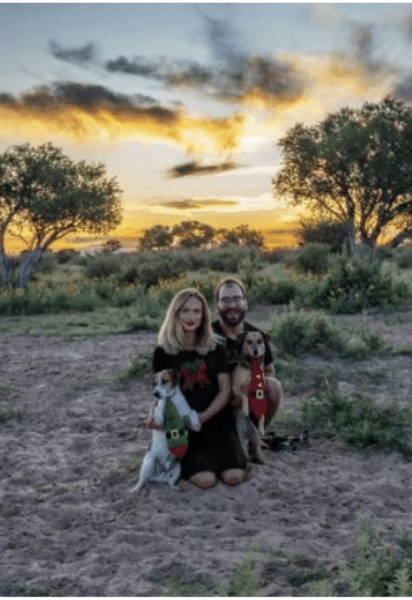
The founders of WWW are a husband and wife team of Edyta Wozna and Gary Scheidner. Edyta is a Polish citizen, a graduate of Coventry University UK, and came to South Africa to staff at Care for Wild Africa (the largest rhino orphanage in Africa). Gary is South African, with a Master’s Degree from the University of South Africa (UNISA), several diplomas in computer sciences, and four years of field experience in data analytics for several South African crime intelligence units dedicated to anti-poaching interdiction. The two met through Care for WildAfrica, and went on to set up WWW in 2018 and build the field camp at the reserve opening in 2019
The“multi-niche” model is a concept which uses data to identify both the most likely reserve conservation activity “participant” and the agents, booking engines, and popular information pathways used by these people. The data isfurther used to identify the participants based upon affinity activities, age, and geographic locations. This data-driven business model preserves capital for operating expenses (approximately R85,000 per month, excluding executive salaries) and capital expenses (approximately R1 M per eight beds of carrying capacity). The result also reduces the size of the camp experience necessary to operate in the black, and the cost to the participants on a daily rate basis. Thus, the model allows for affordable research deployments on the reserve available for graduate studies and institutional works
 Regina Mundi Global Advisors